In this perspective, GBHI International Program Coordinator Matenyeh Kaba and Atlantic Fellow Yared Zewde share reflections from recent site visits to Kenya and Ethiopia, highlighting how the BRIDGE-AFRICA project is strengthening locally led dementia research and care across East Africa.
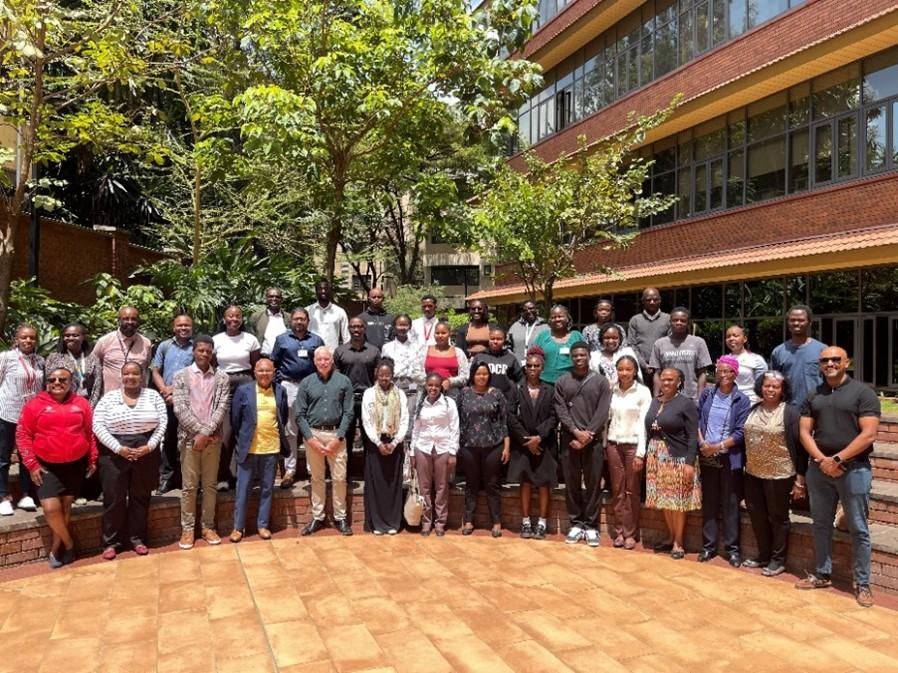
Members of the BRIDGE-AFRICA team from Aga Khan University, Addis Ababa University, and UCSF gathered during the October 2025 site visits in Nairobi, Kenya. Photo courtesy of Matenyeh Kaba.
Dementia is the seventh leading cause of death worldwide, yet most neuropsychological tools used for its assessment and diagnosis were developed and validated in Western populations. The Building Research Infrastructure for Dementia Gaps in East Africa (BRIDGE-AFRICA) project and accompanying neuropsychological battery, were created to address this inequity. Initially funded through multiple Pilot Awards for Global Brain Health Leaders and seed funding from GBHI, and now supported by the U.S. National Institutes of Health (NIH), the project seeks to test and adapt widely used tools in East African communities—creating models for dementia research and care that better represent local cultures and contexts.
Over the past six months, skilled multidisciplinary teams have been established in Addis Ababa, Ethiopia, and Nairobi, Kenya, to advance the project’s goals. In October 2025, we joined the BRIDGE-AFRICA team from the University of California, San Francisco (UCSF)—led by GBHI at UCSF Site Director Victor Valcour—to see BRIDGE-AFRICA’s progress firsthand. The week was filled with hands-on training, team building, and cultural exchange that has strengthened relationships and learning across sites.
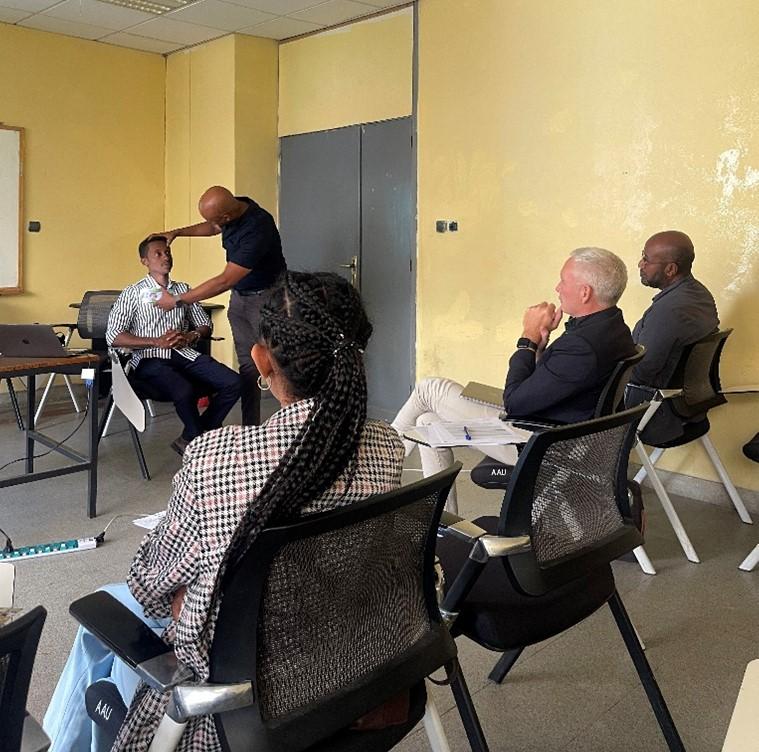
Yared Zewde leads a hands-on neurological examination training with clinical staff at Addis Ababa University as part of the BRIDGE-AFRICA project. Photo courtesy of Matenyeh Kaba.
At Aga Khan University (AKU), Atlantic Fellow and BRIDGE-AFRICA Project Manager Wambui Karanja led us through the radiology and neurology departments, including an opportunity to see a cyclotron—a machine used to produce medical imaging materials—and observe the biomarker sampling process. Clinicians shared their excitement about having new tools that better reflect the needs of the patients they serve. We saw similar enthusiasm during our visit to Addis Ababa University (AAU), where we toured the neurology department and imaging center, witnessing firsthand the high number of patients cared for by a small team of clinicians.
We also reviewed BRIDGE-AFRICA’s shared systems for collecting and managing research data—developed collaboratively by partners in Botswana, Ethiopia, Kenya, and Israel. Seeing these systems in action showed how collaboration can produce high-quality, reliable data while meeting each site’s local needs.
Throughout the visits, mentoring lunches created space for open conversations with staff and trainees. At AKU, Valcour, delivered a lecture titled Accompaniment in Research: Leveraging the Teachings of Paul Farmer for Sustainable Impact, sharing GBHI’s approach to global partnership and the importance of building local systems that last. The talk generated lively discussion and enthusiasm for both BRIDGE-AFRICA and the Atlantic Fellows for Equity in Brain Health program.
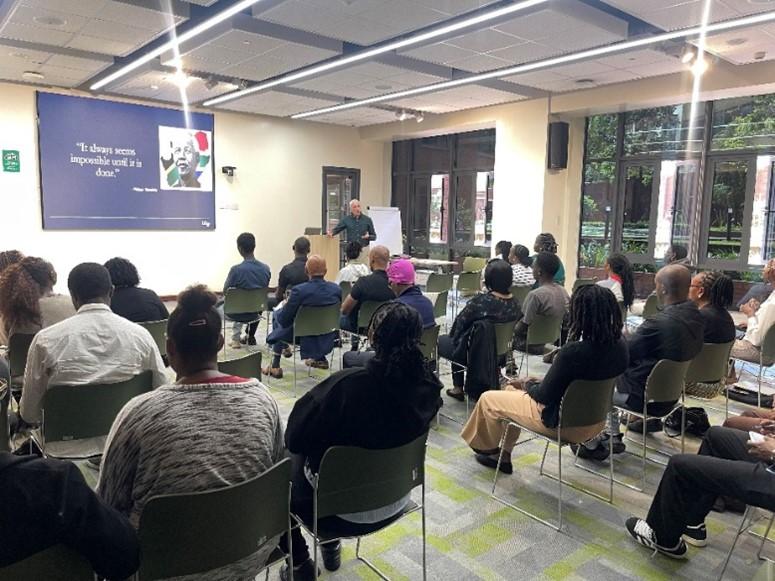
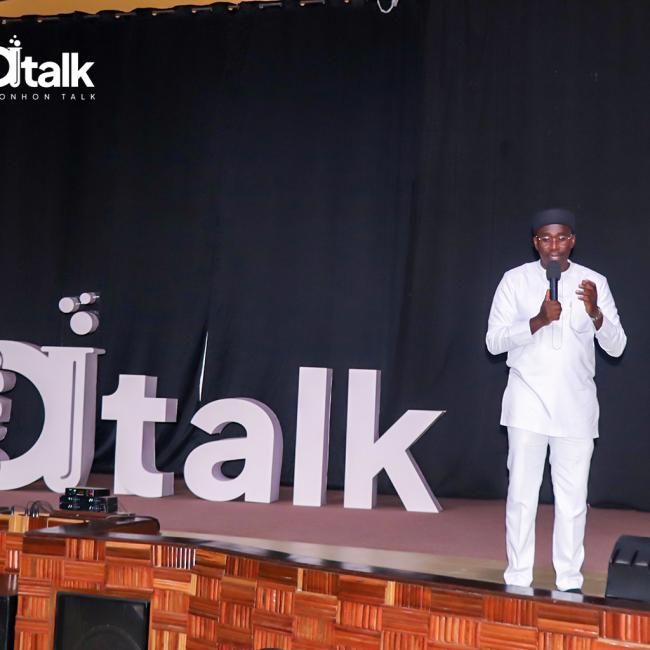
Victor Valcour delivers a lecture on Accompaniment in Research at Aga Khan University, sharing lessons from Paul Farmer’s approach to building sustainable, locally led health programs. Photo courtesy of Matenyeh Kaba.
The second day at each site focused on training clinical staff in the neurological examination protocol currently being adapted for the study. Led by Zewde and Valcour, the sessions combined in-depth instruction with hands-on demonstrations. Participants shared that the training gave them a clearer understanding of the protocol’s purpose and strengthened their confidence in administering it to study participants. By training teams together and using the same approach across sites, BRIDGE-AFRICA is helping ensure that the science is strong and consistent—no matter where the research takes place.
These site visits deepened our understanding of the populations we serve and renewed our commitment to building equitable brain health research worldwide. They also reminded us how powerful local leadership and collaboration can be in addressing the growing impact of dementia in regions where the burden of care is high but resources remain limited.
Authors

Matenyeh Kaba, MA
International Program Coordinator
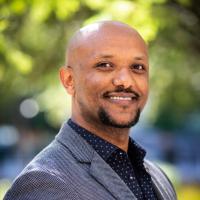
Yared Zewde, MD
Neurologist
GBHI Members Mentioned
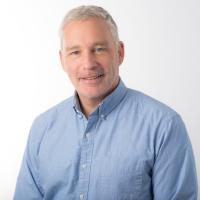
Victor Valcour, MD, PhD
Site Director, University of California, San Francisco

Wambui Karanja
Project Manager