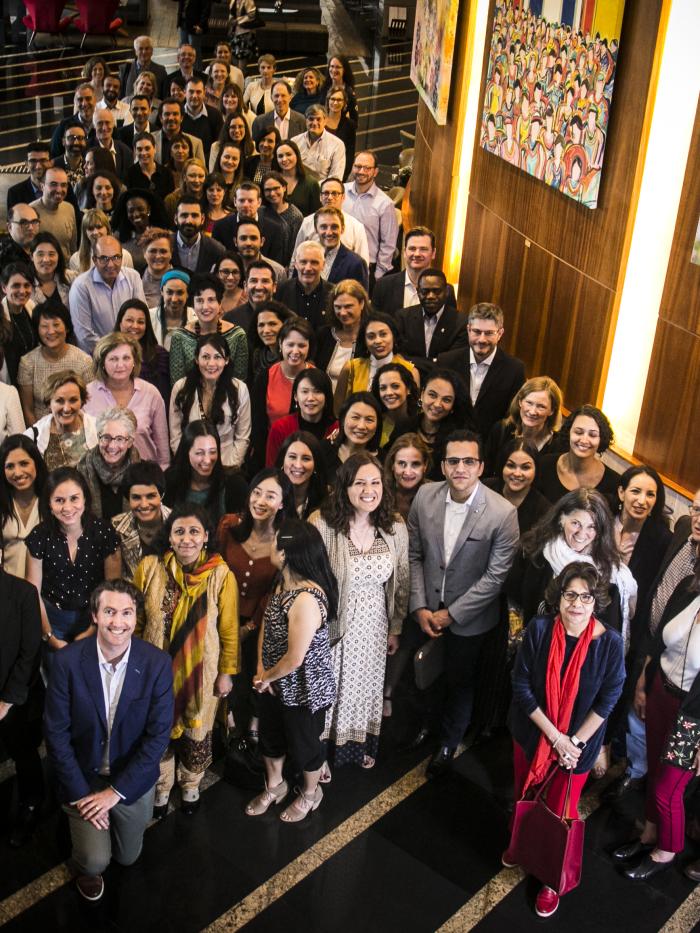
In this perspective, Atlantic Fellow Maison Abu Raya and GBHI faculty member Lea Grinberg reflect on their recent research and explain why Alzheimer’s biology may not look the same in every brain — and why that matters for equity in diagnosis and treatment.
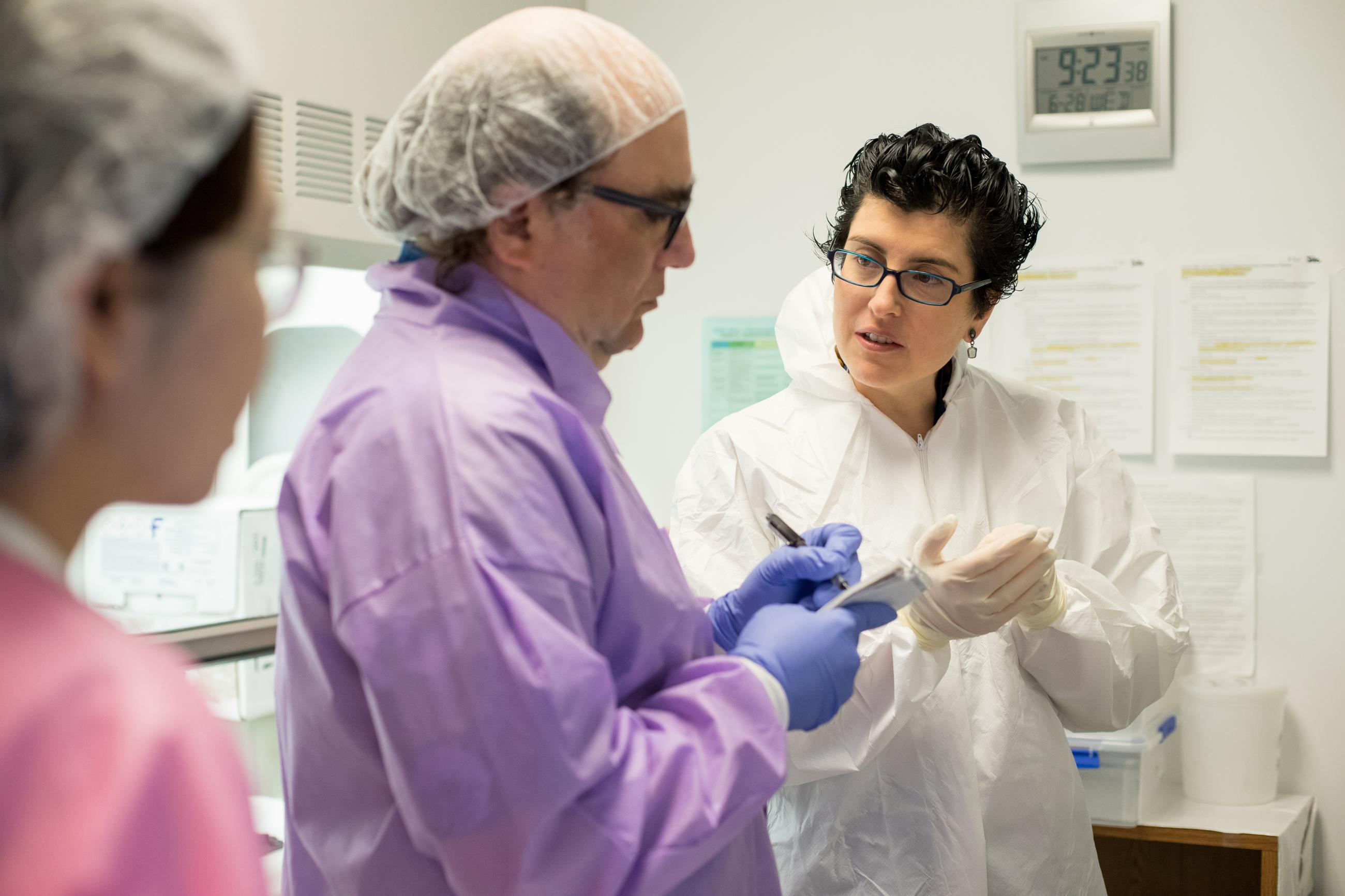
Lea T. Grinberg (right) during a neuropathological session at the UCSF Fein Memory and Aging Center, where researchers study brain tissue to better understand Alzheimer’s disease. Photo by Susan Merrell.
Alzheimer’s disease is often described in broad terms — as if it unfolds the same way in every brain. But what if it doesn’t?
In our study published in JAMA Neurology examining more than 2,200 brains from the Biobank for Aging Studies at the University of São Paulo, we found that the biology of Alzheimer’s disease varies in meaningful ways across sex and genetic ancestry.
Looking Directly at the Brain
Much of what we know about Alzheimer’s disease comes from imaging studies. These tools are powerful, but they rely on thresholds — how much amyloid is considered “positive” or “negative.” Those thresholds are often derived from research cohorts that lack broad demographic diversity.
By studying brain tissue directly at autopsy, we were able to measure amyloid and tau with greater sensitivity across the full range of disease stages.
What we found was striking: women had a higher burden of amyloid plaques than men, even after accounting for age, vascular risk factors, and APOE ε4, the strongest genetic risk factor for late-onset Alzheimer’s disease. Importantly, this excess amyloid in women was closely linked to more advanced tau pathology, which is strongly associated with cognitive decline.
These findings suggest that sex differences in Alzheimer’s disease are not explained by longevity alone.
The Role of Genetic Ancestry
We also observed that individuals with higher African genetic ancestry — particularly Black men — had lower odds of high amyloid plaque burden.
While APOE ε4 increased risk overall, its effect appeared attenuated in individuals with greater African ancestry.
These patterns highlight that Alzheimer’s biology is not uniform. Sex, ancestry, and genetics interact in complex ways. White women in our cohort consistently showed the highest amyloid burden. Black men with higher African ancestry showed the lowest.
This cautions against simplified assumptions based on sex or race alone.
Why This Collaboration Was Possible
This work grew out of questions that could not be answered by biomarkers alone.
During Maison’s fellowship with the Atlantic Fellows for Equity in Brain Health, she became increasingly aware that biomarker interpretations do not always align with clinical trajectories across different populations. The fellowship provided space to deepen analytical skills while grounding the work in equity.
Through mentorship and global collaboration, we partnered with Dr. Claudia Suemoto and colleagues at the University of São Paulo’s Biobank for Aging Studies — a uniquely diverse, population-based brain bank with over two decades of standardized neuropathological data. Only a cohort of this scale and diversity could allow us to examine sex, self-reported race, genetic ancestry, and APOE ε4 together.
Implications for Equity in Brain Health
As new therapies increasingly target amyloid, biomarker interpretation matters more than ever. Uniform thresholds for trial inclusion or treatment decisions may not perform equally across diverse populations.
If precision medicine is to fulfill its promise, it must account for both biological diversity and structural inequities.
For us, this project reflects what GBHI makes possible: interdisciplinary thinking, international collaboration, and a commitment to advancing equity in brain health.
Alzheimer’s disease may be universal. But its biological expression is not uniform — and our research approaches must reflect that reality.
Authors

Maison Abu Raya, MD
Neurologist

Lea Tenenholz Grinberg, MD, PhD
Neuropathologist and Neuroscientist