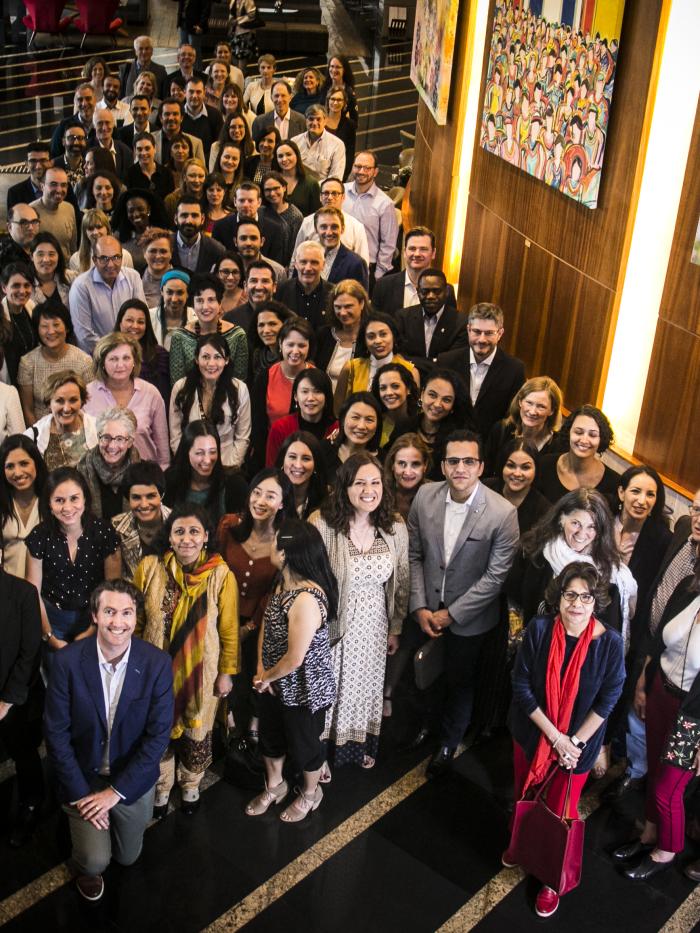
In this perspective, Atlantic Fellow Kiggundu Rodney Erismas reflects on the personal journey that led him to merge art and advocacy in honor of his grandmother’s experience with dementia—and to champion creative, community-based approaches to brain health.
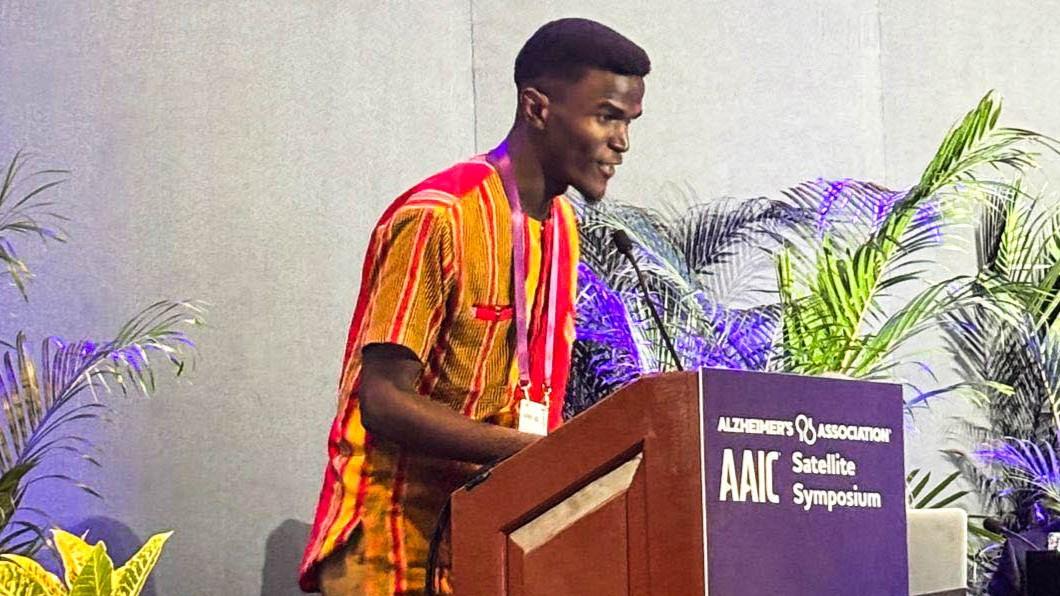
Atlantic Fellow Kiggundu Rodney Erismas presents at AAIC Satellite in Lima, Peru in May 2025. Photo courtesy of Rodney.
Many attendees at the recent Alzheimer’s Association International Conference Satellite Symposium (AAIC Satellite) in Lima, Peru may not have realized it, but stepping onto the stage for my three-minute lightning presentation was a deeply emotional and reflective moment for me. It marked my first time presenting on a scientific stage—not just as an artist, but as a grandson carrying the memory of someone I loved dearly.
My late grandmother was with me in spirit that day. She was a beacon of hope who loved people and community, and I could feel her presence as I stood before the audience. Most profoundly, I remembered her experience with dementia before her passing in 2018. I know she would have been proud to see me using my voice and creativity as a vessel of hope for a condition she once lived with.
Where Art Meets Memory
My grandmother was a gifted storyteller—her tales were windows into life, care, and connection. As children, we were shaped by her values and the stories she shared. She was also a skilled craftswoman who often sat quietly on a mat, crocheting or knitting with incredible focus. I vividly recall the day of my art school graduation in 2016, when one of my artworks was auctioned off and gifted to her. That moment of honor and love remains one of my most cherished memories, captured in a treasured photo (shown below).
But when she was diagonised with Alzheimers disease, everything began to change. She could no longer knit or crochet with. Her storytelling quieted. She stopped attending many social events and spent more time in and out of the hospital, facing other health challenges alongside her gradual cognitive decline. These were heavy times for our family—filled with fear, adaptation, and the quiet courage required to move forward. Yet what we held onto most were the values she passed down, which continue to guide my work with communities around the world.
I’ve become more committed than ever to using art and advocacy to honor not just my grandmother, but many others navigating similar paths.
—Kiggundu Rodney Erismas, Atlantic Fellow for Equity in Brain Health
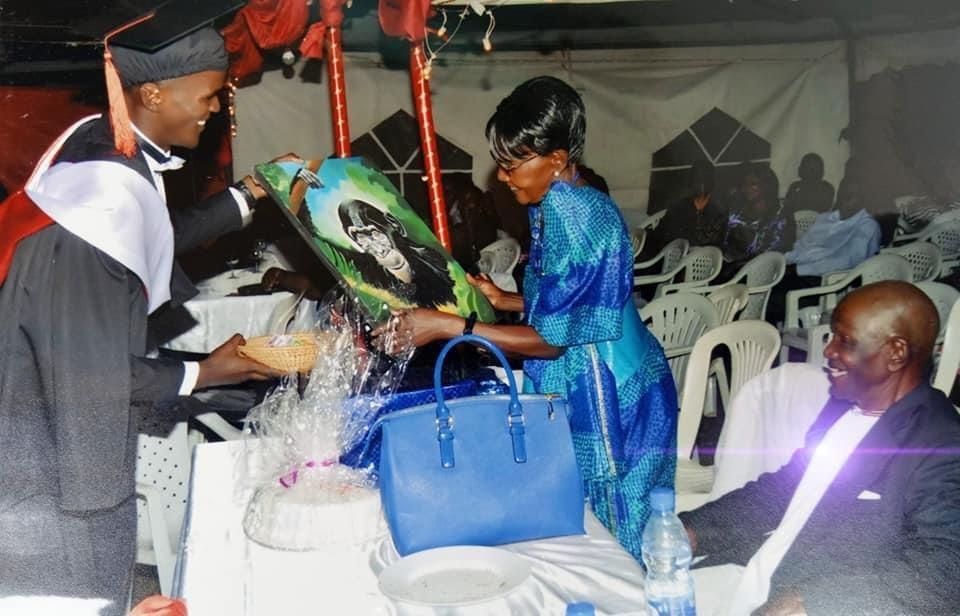
Rodney presents a painting to his grandmother during his graduation in 2016—a moment of joy before her Alzheimer’s diagnosis in 2018. Photo courtesy of Rodney.
At AAIC Satellite, I had the honor of sharing my proposed pilot project: “Indigenous Art for Social Engagement and Dementia Awareness in Northern Uganda.” This project explores:
- The profound impact of art and storytelling on my life, and on people living with dementia (PLWD) and their caregivers
- How storytelling fosters deeper, more authentic connections
- The role of indigenous knowledge in education and in building supportive systems for isolated older adults in low-income communities.
- How collaboration between scientists, researchers, and artists can advance dementia research, diagnosis, and holistic care globally
Carrying Her Legacy Forward
As an artist, I often asked myself: How can I contribute to the global conversation around Alzheimers disease and related dementias? I began to find answers when I joined the Global Brain Health Institute (GBHI) community last year as an Atlantic Fellow for Equity in Brain Health. Through learning, collaboration, and exposure to inspiring leaders, researchers and fellow changemakers, I’ve become more committed than ever to using art and advocacy to honor not just my grandmother, but many others navigating similar paths—whether as carers or as PLWD themselves.
By continuing to share the values my grandmother instilled in us and uplifting lived experiences through creativity and storytelling, I hope to dignify and honor aging populations and foster empathy. Through initiatives like Elders Creative Circles, I envision inclusive spaces where elders’ voices, stories and artistry can thrive.
It was an immense honor to stand alongside incredible lightening presenters and changemakers at the symposium. I’m deeply grateful to GBHI and the Alzheimer’s Association for providing this platform. The event spotlighted the tireless work of researchers, clinicians, caregivers, artists, and organizations dedicated to advancing brain health.
One of the most powerful moments of the symposium was the closing session—an intimate space where caregiver testimonies were shared with raw honesty and emotion. Hearing from Atlantic Fellows like Alex Kornhuber, Sonata Maciulskyte, Fernando Aguzzoli Peres, Michelle Memran, Sonia Sánchez, and Sarah Cullum was both heartwarming and inspiring. Their reflections reminded us all of the urgent need to center and uplift the voices caregivers in this global conversation.
Learn more about Rodney’s U.S. debut exhibition "Mindscapes" and join the opening reception at UCSF on July 10, 2025 — event details here.
Authors
Kiggundu Rodney Erismas, BFA
Artist