In this perspective, Atlantic Fellows Anusha Yasoda-Mohan and Aline Haas reflect on a creative, movement-based workshop where participants used music and dance to explore and learn about the experience of tinnitus.
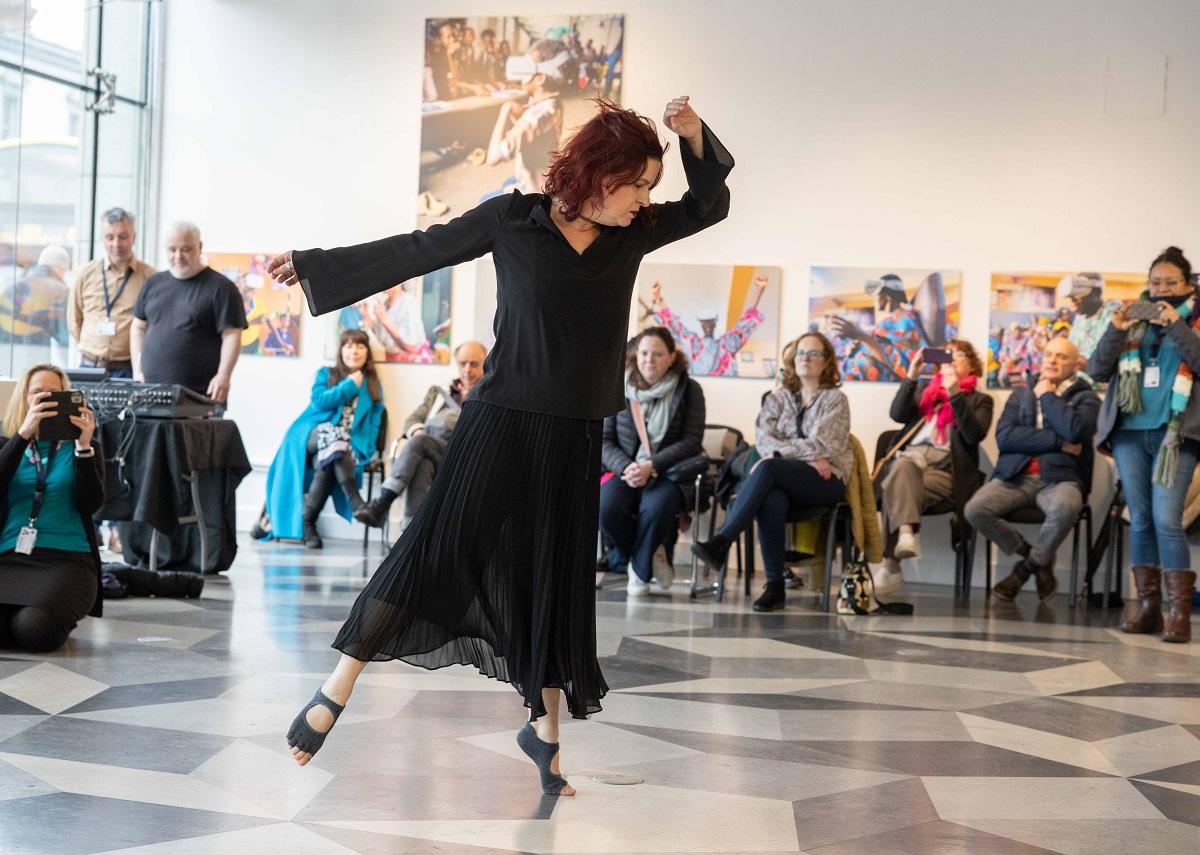
Aline Haas dancing. Photograph: Paul Sharp, Sharppix
Internal sounds — such as our heartbeat, chewing, breathing, and peristalsis — are a natural part of our bodies, and our brains have mechanisms to quieten these sounds to prevent distraction and enable us to engage with external sounds. But what if there were a sound that our brains could not silence? What if it had no source? How do you live with a constant sound, no matter what you do?
Tinnitus — the perception of a sound without an external source — is commonly described as a high-pitched ringing or buzzing in the ear or head. Almost all of us have experienced it at some point — for instance, after a loud concert, having too much coffee, sugar, or alcohol, or during times of extreme stress or poor sleep. Usually, the tinnitus fades after a few hours or days. But imagine if it didn’t — if the ringing was there 24/7, when you went to sleep, when you sat down to meditate, when you worked or worked out. What would life be like?
About 10–20% of the population have some form of tinnitus, rising to about 30% in older adults. Most people don’t notice it; however, for a significant proportion — about 3–4% of the population — it is extremely debilitating, and they cannot focus on anything except their tinnitus. People living with tinnitus often describe their lives as being dominated by the fear of what might happen if their sound worsens. They are also reluctant to discuss it, fearing that their condition will be stigmatised. Family members frequently report that they don’t fully understand what their loved ones are experiencing and are unsure how to accommodate their needs.
From a biopsychosocial perspective, tinnitus is most commonly accompanied by hearing loss, leading people to believe that it is an ear problem. However, it is now widely accepted that tinnitus involves a complex interplay of different brain systems. Tinnitus is not just a sound — it involves pitch, loudness, duration (how long someone has had it), sidedness (whether it is perceived on one or both sides), related distress, sleep and cognitive disturbances (mainly attention), and is sometimes accompanied by comorbid depression and anxiety. These components are encoded by activity and connectivity across multiple brain regions, making tinnitus a complex interplay between auditory and non-auditory systems.
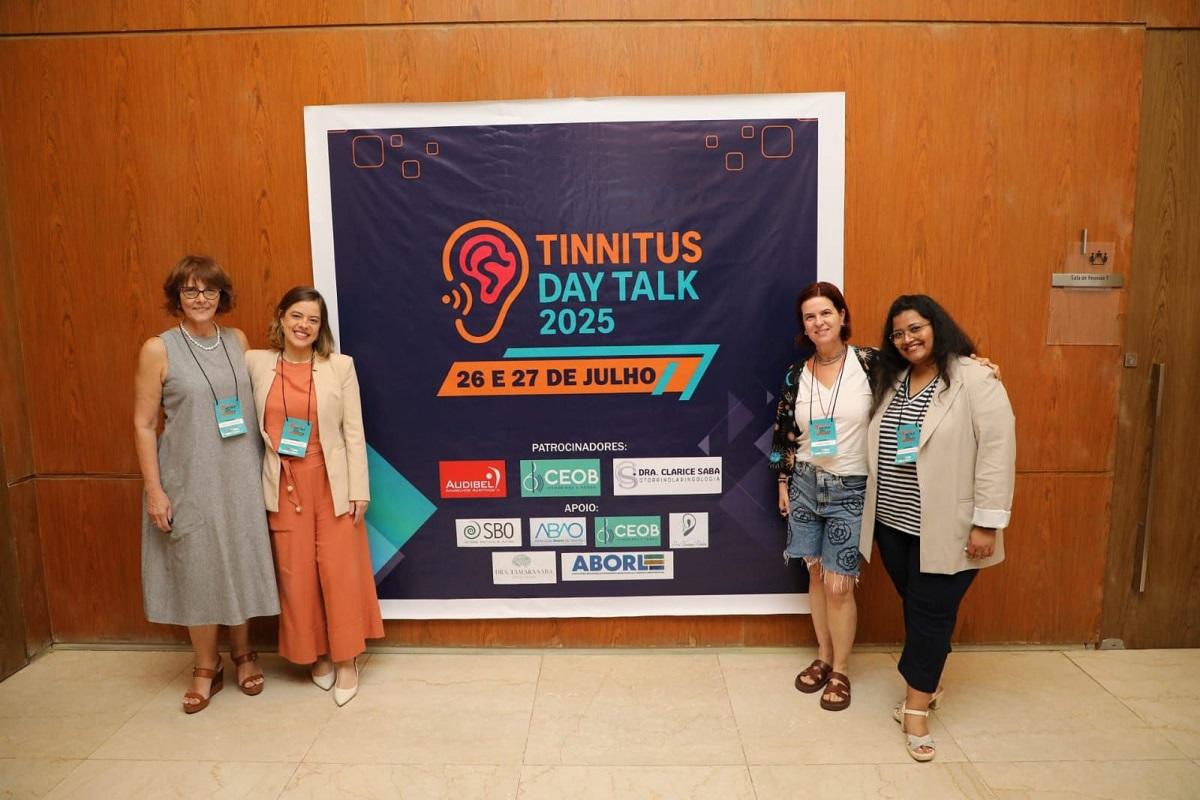
From left to right: Dr. Clarice Saba, Dr. Tamara Saba, Dr. Aline Haas, and Dr. Anusha Yasoda-Mohan at Tinnitus Talk 2025.
Creative Arts for Tinnitus: Movement, Music, and Connection
The creative arts can create a space for open communication by breaking down silos and bringing people together on a deeply human level. They have been shown to accelerate learning, build trust, and strengthen connections — not just among peer groups, but also across multi-stakeholder groups involving clinicians, researchers, and people with lived experience.
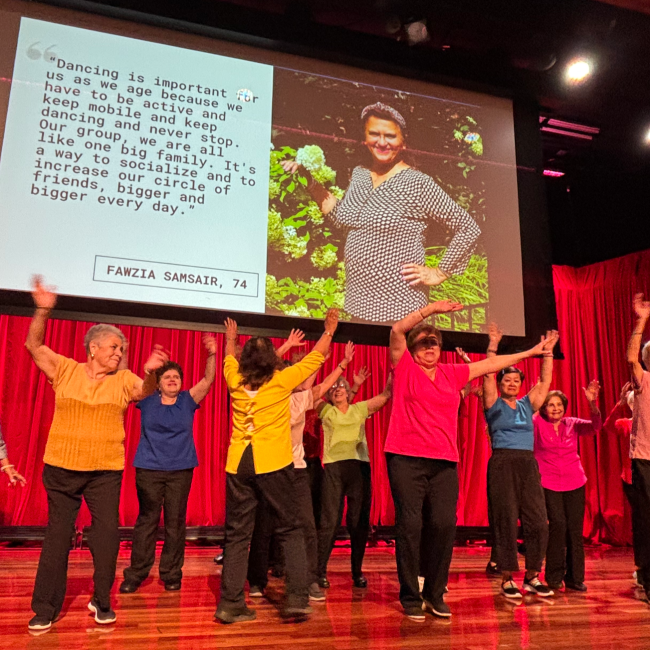
Building on this approach, in a cross-border collaboration between the Global Brain Health Institute’s South Asian and Brazilian Regional Networks, we facilitated a 90-minute creative, movement-based workshop for people living with tinnitus, carers, and clinicians, in Salvador-Bahia, Brazil, during Tinnitus Day Talk 2025. The workshop explored tinnitus through Indian and Brazilian music and movement, aiming to break down barriers between people with lived experience and professionals. Participants learned about ear anatomy through an audio-visual presentation reinforced by a choreographed dance to Indian cinematic music, led by Atlantic Fellow Magda Kaczmarska and Anusha, which embodied how the ear and brain process sound.
To engage with their lived experience, Aline guided participants using a balloon to represent their tinnitus, moving individually and with peers while exchanging balloons to experience different perspectives. Songs encouraged singing, dancing, and reflection.
The movements, music, and meaningful lyrics empowered participants to share experiences openly, shifting the energy in the room from scepticism to trust and connection. Many shed tears, some reported they had almost forgotten their tinnitus, and others described relief and light-heartedness in expressing their needs and understanding how sharing with others can co-create a supportive environment.
This was the first time, to our knowledge, that dance and creative movement were used for self- and group-exploration of tinnitus.
—Atlantic Fellows Anusha Yasoda-Mohan and Aline Haas
Dance has been used in therapy for anxiety, depression, trauma, and other difficult experiences because it engages both central and autonomic nervous systems to regulate emotions. Given that tinnitus activates several common brain regions and shares comorbidities, it is not surprising that participants expressed a sense of relief and safety at the workshop. This raises the question of whether movement-based creative arts could have a broader role in regulating sensory experiences, from both a biopsychosocial and lived experience perspective.
The two-day Tinnitus Day Talk 2025 event, organised by Dr. Clarice Saba, an MD Otolaryngologist, also featured presentations by clinicians and researchers on evidence-based practice. Anusha, as the invited international keynote speaker, presented on the neural correlates of tinnitus and the link between tinnitus and cognitive decline, supported with Pilot Award for Global Brain Health Leaders funding from GBHI, Alzheimer’s Association, and Alzheimer’s Society.
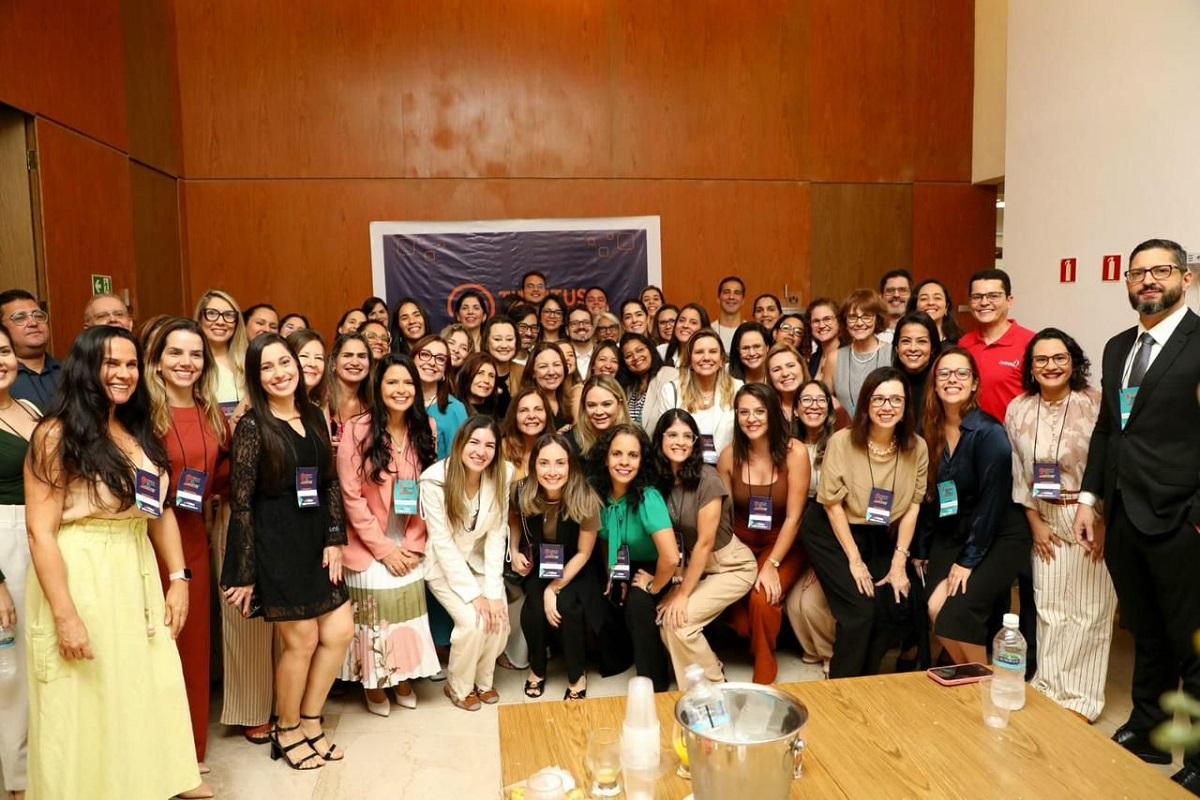
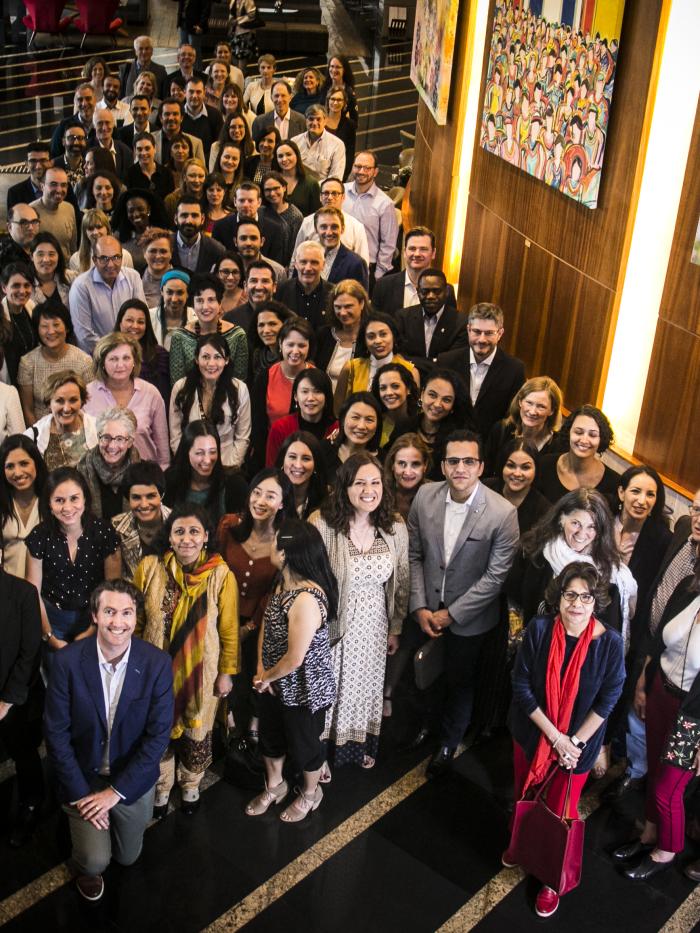
Group photo of multidisciplinary attendees of Tinnitus Talk 2025 from the Salvador-Bahia region.
Authors
Aline Haas, PhD
Dancer, Researcher

Anusha Yasoda-Mohan, PhD
Neuroscientist
GBHI Members Mentioned

Magda Kaczmarska, MFA
Dance Artist