About the Fellowship
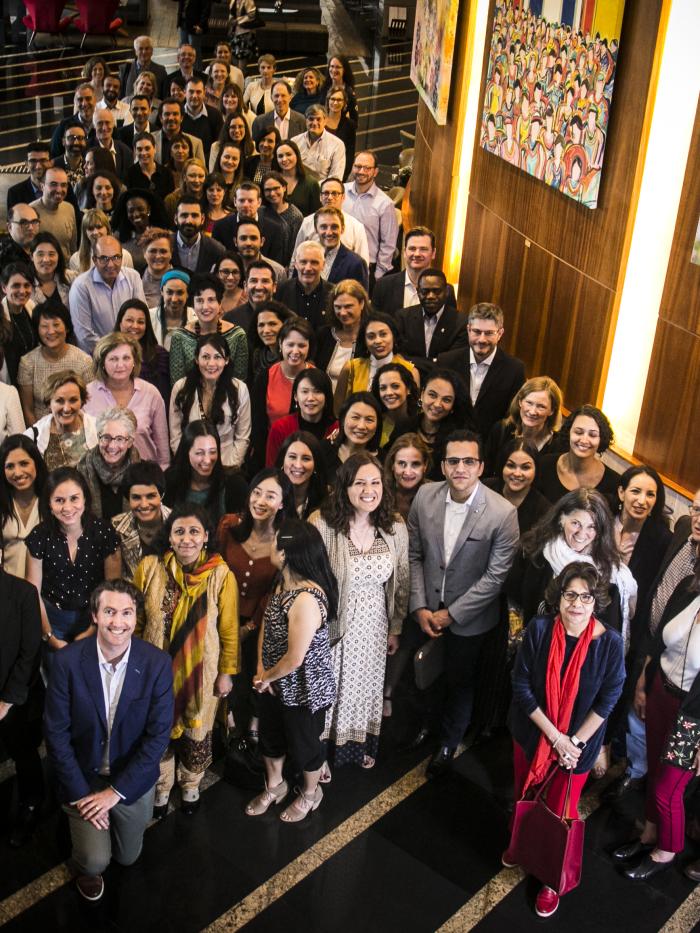
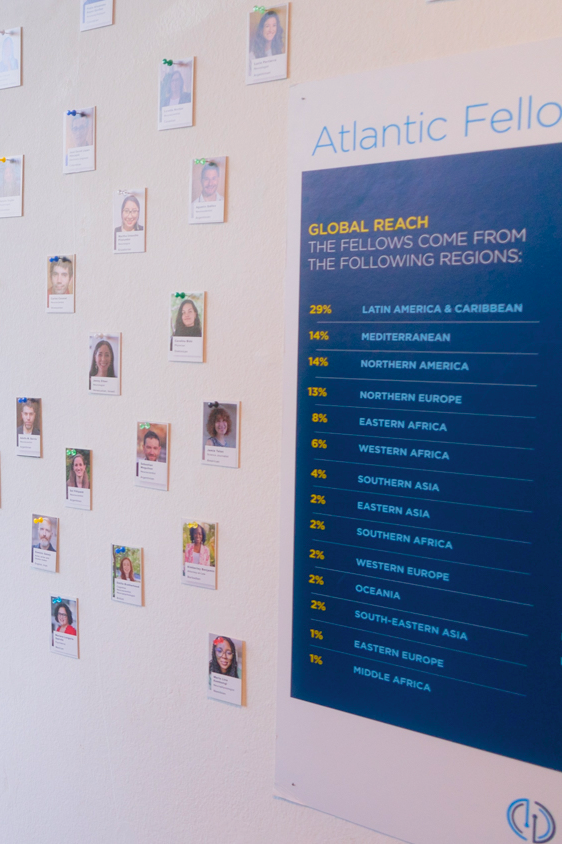
The scale and complexity of brain health challenges call for new ways of working—bringing together diverse disciplines, sectors, and perspectives to drive meaningful and lasting change. Atlantic Fellows respond to a critical global gap: the need for strong, collaborative leadership capable of addressing the interconnected challenges affecting brain health worldwide.
The fellowship program at Trinity is designed to build the knowledge, skills, and networks required to advance brain health on a global scale. It is grounded in a comprehensive understanding of dementia and brain health across the life course, alongside a commitment to embodying GBHI’s values in practice.
Through this approach, fellows are equipped to lead, drive change, and advocate for more equitable brain health outcomes.
Learning Experience
The learning experience is structured around four core components: curriculum, leadership, mentorship, and clinical and lived experience.
Curriculum
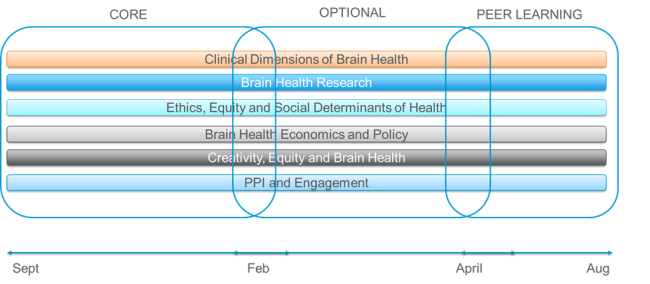
The fellowship curriculum is a dynamic program of interactive sessions, workshops and group learning delivered in three phases, evolving from core learning to optional electives and peer‑led sessions. Fellows also undertake skills‑based activities to build confidence in proposal writing and presentation.
Leadership
The leadership curriculum aims to develop the skills needed to become an effective, collaborative team member and a leader and change agent in brain health and dementia prevention. It is centred on principles of equity, anti‑racism, decolonisation and a decentralised approach to leadership, creating a global community of leaders. Fellows engage through a leadership retreat, small‑group sessions, fellow‑led learning and the GBHI Annual Conference.
Mentorship
Mentorship is a key component of the Atlantic Fellows for Equity in Brain Health program and has two important aspects.
- Faculty mentors: All fellows are assigned to a GBHI faculty member who helps orient them to the program and its opportunities, and supports them in shaping their medium‑ and long‑term goals. Mentors also connect fellows with relevant resources and networks, and guide them through the pilot project application.
- Regional mentors: Fellows are also supported by a regional mentor—typically a senior leader from their region or discipline—who provides high‑level guidance on the fellowship and pilot project, as well as support in shaping long‑term career goals when they return to their home region.
Fellows may also involve other subject matter experts as part of their overall mentorship team.
Faculty Mentors at Trinity
GBHI faculty mentors bring expertise across disciplines including neuroscience, mental health, public health, engineering and the arts.
- Claire Gillan: computational psychiatry, mental health, citizen science
- Agustín Ibáñez: leads multicentric research that addresses environmental factors, including social and physical exposomes, and their interactions with biological processes in aging and dementia across diverse populations
- Nicholas Johnson: how theatre laboratory work can generate new knowledge for more interdisciplinary contexts in a wide range of fields
- Brian Lawlor: dementia, diagnosis and care, loneliness, depression in older people
- Iracema Leroi: dementia trials, sensory cognitive impairment, Public Patient Involvement (PPI), Lewy Body Dementia
- Alejandro Lopez: digital brain health, neural engineering
- Eimear McGlinchey: the promotion and maintenance of brain health in people with an intellectual disability, with particular focus on the area of dementia in people with Down syndrome
- Lorina Naci: neuroimaging, consciousness, mid life risk factors for brain health
- Roman Romero-Ortuno: frailty, geriatrics
- Katy Tobin: population health, biostatistics, fetal alcohol syndrome
- Dominic Trépel: health economics of dementia, brain health antenatal health
- Sven Vanneste: neuromodulation, tinnitus and brain health
- Robert Whelan: computational neuroscience, EEG, neuroimaging, machine learning
Clinical and Lived Experiences (CLE)
Throughout the year, Atlantic Fellows have opportunities to observe across a range of clinical and community-based settings. These experiences help develop a better understanding of clinical practice and dementia care, as well as the lived experience of people with dementia and their families. This learning is strengthened by case‑based discussions, seminars and practice‑focused sessions.
More detailed information is provided at orientation. Examples of opportunities include:
Certificate Award
Atlantic Fellows undertaking the fellowship in person at Trinity have the opportunity to register for a Trinity College Postgraduate Certificate in Equity in Brain Health as part of their fellowship, providing fellows with academic recognition of the work they undertake in the program.
Pilot Projects
A key element of the programme is the development of an application for pilot project funding. These awards support both leadership development and projects that improve outcomes in brain health.
Fellows have the opportunity to apply for competitively awarded Pilot Awards for Global Brain Health Leaders, supported in partnership with the Alzheimer’s Association and Alzheimer’s Society (UK).
Cross‑Site Collaboration and Alumni Network
Building a global community of alumni working together to tackle inequities in brain health is central to the Atlantic Fellows for Equity in Brain Health.
The program begins by building connections within the Trinity cohort, before linking fellows with colleagues at the University of California, San Francisco (UCSF) GBHI site through shared learning and collaboration. As the year progresses, fellows engage with the wider alumni network and the Atlantic Institute, becoming part of a global community committed to advancing brain health equity.
The Latest News
Contact Us
For questions regarding the Atlantic Fellows for Equity in Brain Health program please contact: GBHIApply@tcd.ie