A new play and community festival are helping people better understand frontotemporal dementia through art and storytelling.
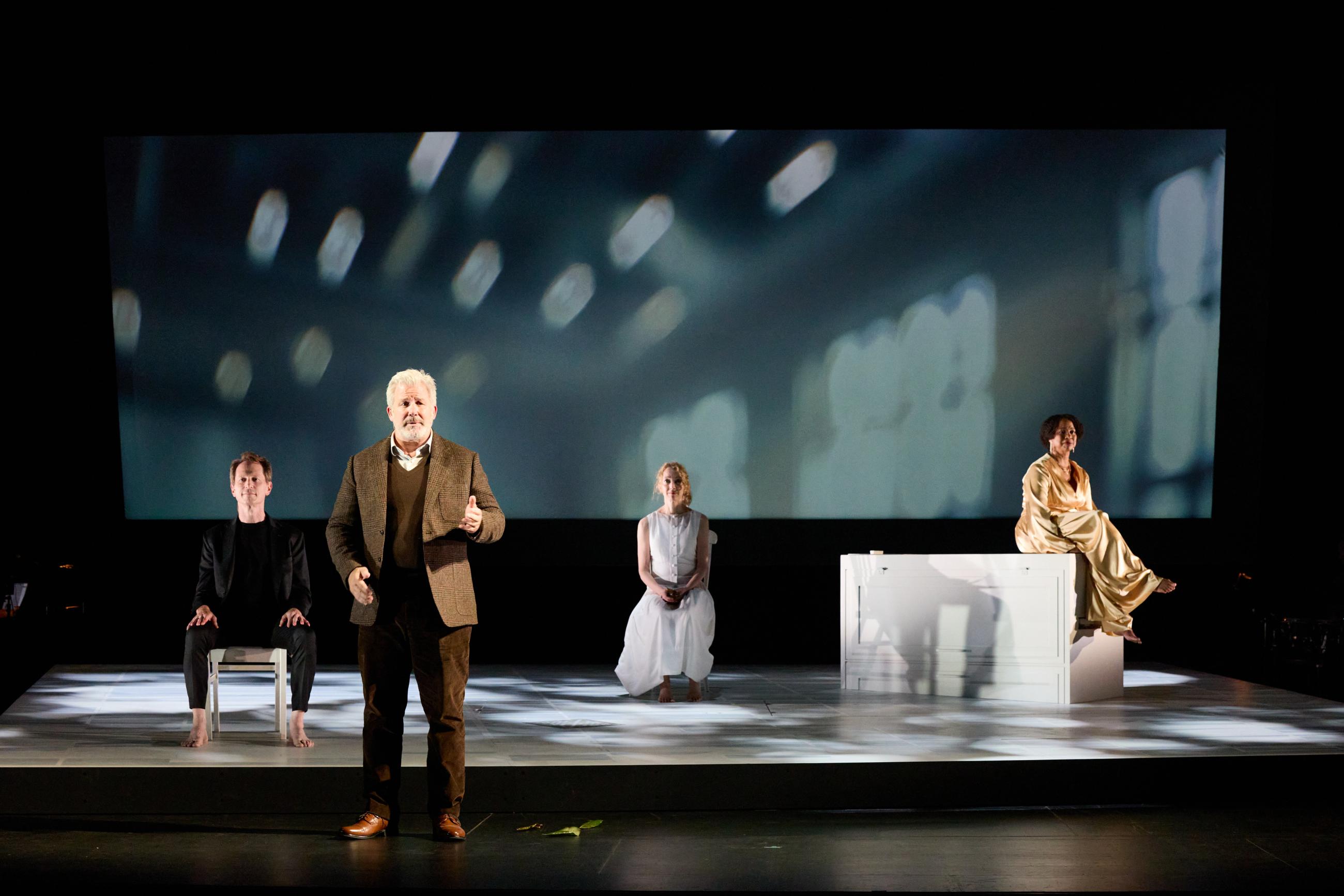
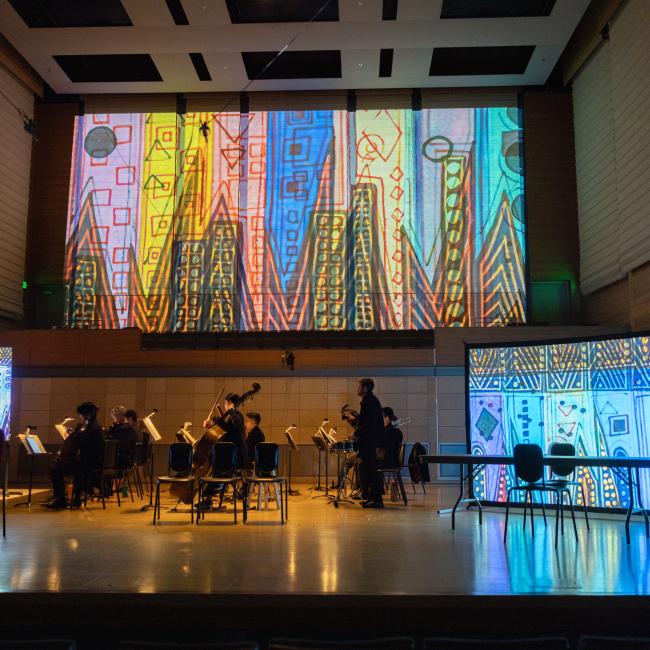
Cast members perform a scene from UnRavelled at the Wallis Annenberg Center for the Performing Arts during the UnRavelled Brain Festival. Photo by Stan Evans.
The power of art and neuroscience converged in Beverly Hills, California, from October 17–19, with the world premiere of UnRavelled — a new drama by playwright and Atlantic Fellow for Equity in Brain Health Jake Broder. Performed at the Wallis Annenberg Center for the Performing Arts, the production anchored the first-ever UnRavelled Brain Festival, a public program designed to raise awareness of frontotemporal dementia (FTD) and connect caregivers, clinicians, researchers, and communities to resources and hope.
This collaboration reflects a growing international effort to increase understanding of FTD and other brain health challenges while supporting families worldwide.
Bringing Brain Health to the Stage
Directed by James Bonas, the production features music and sound by Mark Grey and is produced by Cath Brittan, with standout performances by Lucy Davenport, Andrew Borba, Leo Marks, Tracey A. Leigh, and Larry Poindexter, who bring the real-life story to the stage with emotion and depth. The play tells the remarkable true story of Canadian scientist Anne Adams, who experienced a profound shift to become a visual artist as she developed primary progressive aphasia (PPA), the language form of FTD. Davenport portrays Adams in a moving performance that captures her transition from left-brained biologist to a right-brained artist in a vibrant world of color and sound — including a deep fascination with Maurice Ravel’s Boléro, which inspired her celebrated painting Unravelling Boléro. The painting was publicly exhibited at the Wallis for the first time during the festival.
FTD is the most common form of dementia for people under age 60, yet many individuals go years without answers. Through theater, Broder hopes to shift that narrative.
“When someone has a diagnosis, it doesn’t mean all the value in their life has gone,” Broder said. “There is still incredible resilience and beauty.”
On stage, audiences witness Adams’ creativity flourish even as her language skills declined — reflecting what many caregivers and clinicians observe: that identity, connection, and expression can endure in surprising ways, even in the presence of brain disease. Marks — also an Atlantic Fellow — portrays composer Maurice Ravel, whose own medical history reveals striking parallels to Adams’ condition decades earlier.
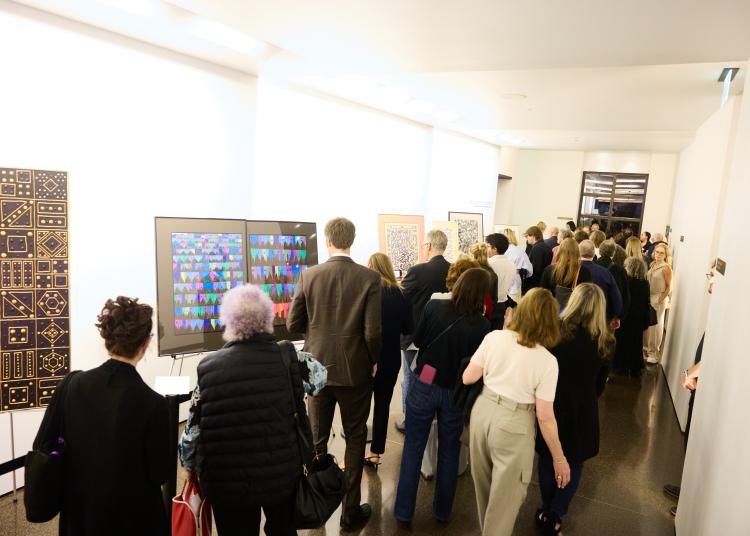
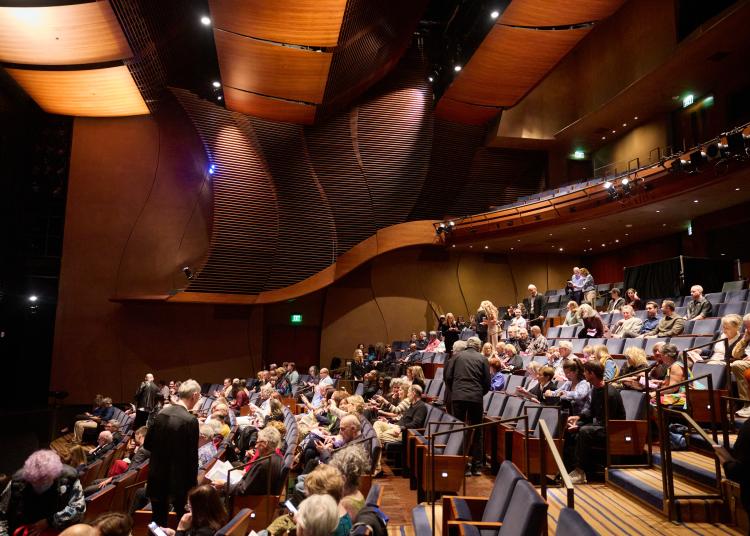
Left: Festival attendees view artwork by Anne Adams, whose creative journey inspired UnRavelled. Right: Community members take their seats for the world premiere performance in Beverly Hills. Photos by Stan Evans.
Community Engagement Through Art and Connection
Beyond the applause of the theater, the UnRavelled Brain Festival invited audiences to engage directly with leading researchers, advocates, and caregivers. Interactive exhibits invited attendees to experience the challenges of FTD firsthand — from language changes to shifts in movement and behavior. Panel discussions and post-show conversations featured voices across the field, including advocates like Emma Heming Willis and Linde Jacobs, whose work is bringing greater visibility to the disease.
A series of art workshops provided space for connection and creative expression among people living with FTD and their care partners. Led by Atlantic Fellows for Equity in Brain Health — Cathy Correa Lopera, Magda Kaczmarska, Laura María Calderón Cuevas, and Verónica Rojas — these workshops included music, visual art, movement, and storytelling activities inspired by Adams’ approach to creative expression without relying on language. Each session fostered resilience and meaningful communication while reinforcing the role of art in sustaining dignity and human connection.
Among the festival highlights was the first-ever public exhibition of Adams’ paintings, vividly illustrating how her artistic abilities grew as her disease progressed. Following its display at the Wallis, this exhibition has moved to Gallery 190 at the UCSF Edward and Pearl Fein Memory and Aging Center, where it will remain open to the public through January 2, 2026.
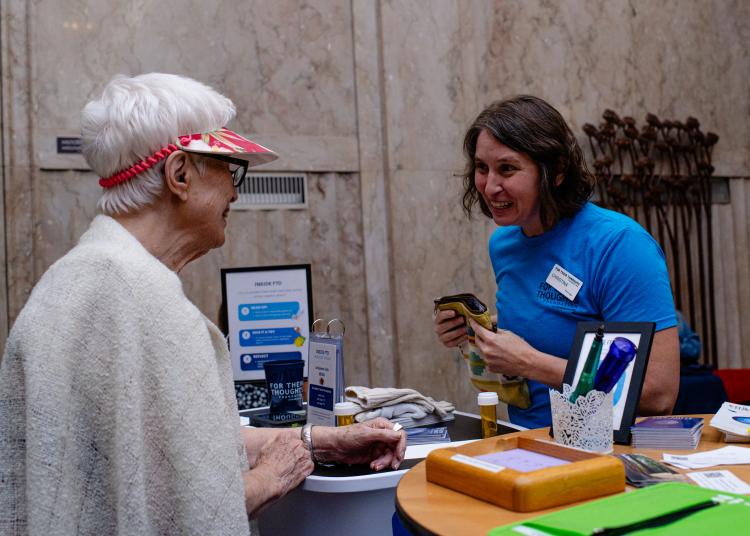
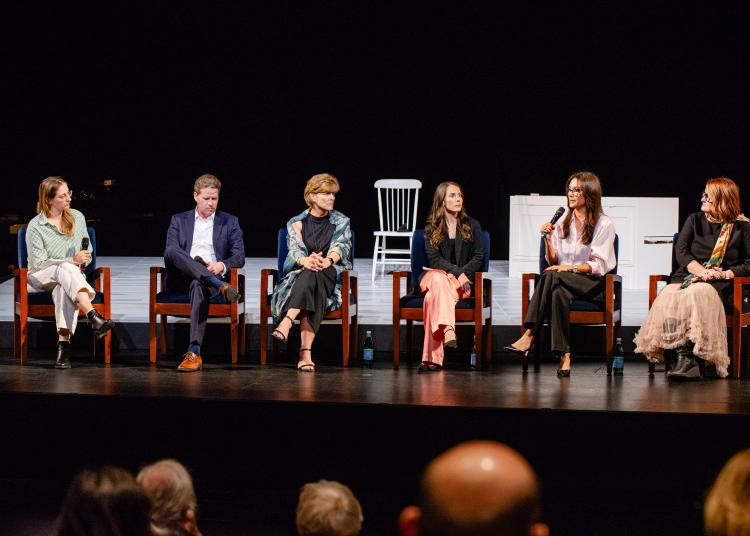
Left: A volunteer helps visitors learn about frontotemporal dementia through interactive activities at the festival. Right: Panelists discuss frontotemporal dementia during a post-show conversation at the UnRavelled Brain Festival. Photos by Isaak Berliner.
Collaboration for Global Impact
The success of UnRavelled and the UnRavelled Brain Festival was made possible through collaboration across scientific, artistic, and community organizations in the United States and beyond — all united in a shared goal to improve understanding of dementia through art, research, and public engagement.
Support was generously provided by the Association for Frontotemporal Degeneration; the Kissick Family Foundation; the UCSF Fein Memory and Aging Center; the Global Brain Health Institute; Lilly Pharmaceuticals; the Dana Foundation; For Their Thoughts Foundation; Kristin Holloway; the San Francisco Conservatory of Music; Kestrel Neuroscience; 3F Foundation; and Robin Donohoe. Local partners included Cedars-Sinai; the UCLA Brain Research Institute; the UCLA Easton Center; the BrightFocus Foundation; and Alzheimer’s Los Angeles, with additional support from the Wallis Annenberg Center for the Performing Arts.
As UnRavelled prepares to reach new cities — partnering with medical and advocacy groups along the way — the production underscored the vital role of art in fostering empathy, reducing stigma, and improving the lives of people affected by dementia around the world.
Learn more and get support
For information about UnRavelled, resources on frontotemporal dementia, and ways to support people and families affected by the disease, please visit unravelledplay.com.
Authors
Caroline Prioleau
Writer & Designer
Niall Kavanagh
Communications Officer
GBHI Members Mentioned
Jake Broder, MA
Playwright, Actor, Screenwriter, Musician
Leo Marks, BA
Actor & Communication Consultant
Cathy Correa Lopera, M.Mus.
Music and Movement Educator
Magda Kaczmarska, MFA
Dance Artist

Laura María Calderón Cuevas, MA
Internationalist, Musician, Human Rights Activist
Verónica Rojas, MFA
Artist