Peru has approved its first national plan to address Alzheimer’s disease and other dementias, marking an important step toward strengthening prevention, diagnosis, care, and support for families across the country.
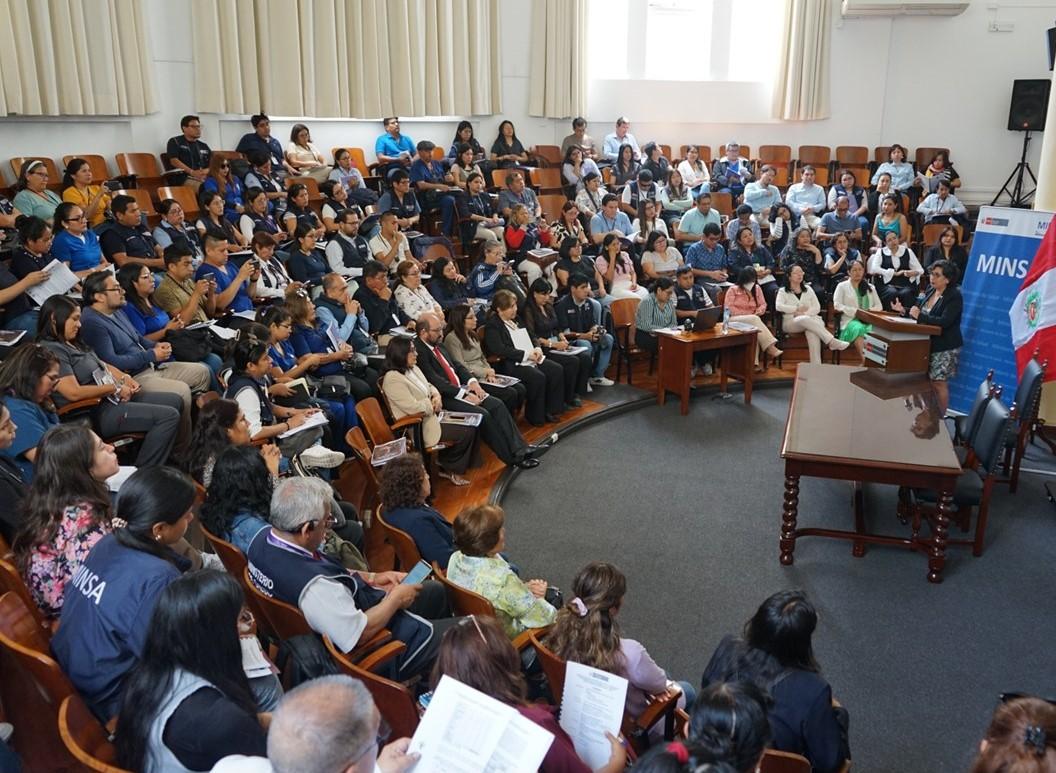
Participants gather for a national discussion on dementia care and policy in Peru. Photo courtesy of Impact Salud and CRONICAS.
Peru has taken an important step toward improving care and support for people living with dementia. In November 2025, the National Plan for the Prevention and Treatment of Alzheimer’s Disease and Other Dementias (2026–2028) received formal approval from the Ministry of Health. The plan was publicly launched in December, following years of sustained effort by civil society groups, researchers, clinicians, and government partners.
This approval places dementia firmly on Peru’s national health agenda. For many families, it reflects long-standing efforts to address gaps in early diagnosis, access to services, and support for caregivers, in a country facing a rapidly aging population.
A core focus of the Global Brain Health Institute (GBHI)’s work is supporting Atlantic Fellows for Equity in Brain Health and faculty to engage in long-term, relationship-based policy efforts that advance brain health equity, particularly in settings where national strategies are still emerging.
From advocacy to action
In Peru, Atlantic Fellows have played a key role in advancing this work, contributing across research, clinical care, and policy, and bringing technical expertise, lived experience, and storytelling into the process. Working alongside local and regional partners, they helped strengthen conversations about what a national dementia plan should include and how it can respond to real needs on the ground.
Maritza Pintado-Caipa, a neurologist at the Ricardo Palma Clinic’s Memory and Neurodegenerative Diseases Unit in Lima and a professor at the National University of San Marcos, served as a consultant to Peru’s Ministry of Health and an advisor to Impact Salud. She worked closely with Marcela Mar Meza, a geriatrician at the Hospital Central de la Fuerza Aérea. Together they developed technical papers and provided guidance on approaches to dementia diagnosis and caregiving. This work was carried out hand in close collaboration with Serggio Lanata, a neurologist and faculty member at GBHI at the University of California, San Francisco (UCSF).
“Witnessing the challenges that neurocognitive disorders pose to patients and their families motivates us to participate in initiatives that help guide Peru’s healthcare response,” said Mar Meza. “It has been gratifying to see national authorities recognize this reality and show willingness to strengthen the country’s response.”
Reflecting on the broader significance of the plan, Pintado-Caipa said:
“The challenge for us—clinicians, researchers, as well as policymakers and other stakeholders—is to recognize the great privilege of working for populations in a highly diverse country. That diversity requires us to develop a broad and deep understanding of its many facets in order to implement a dementia plan that truly works for everyone.”
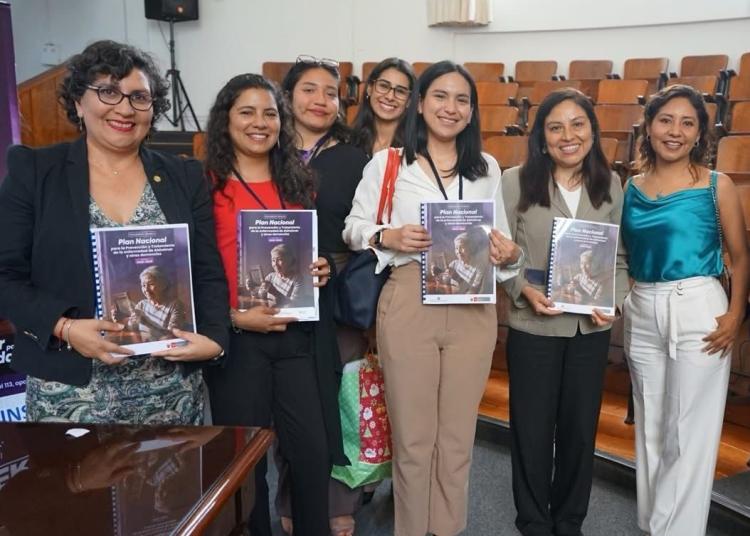
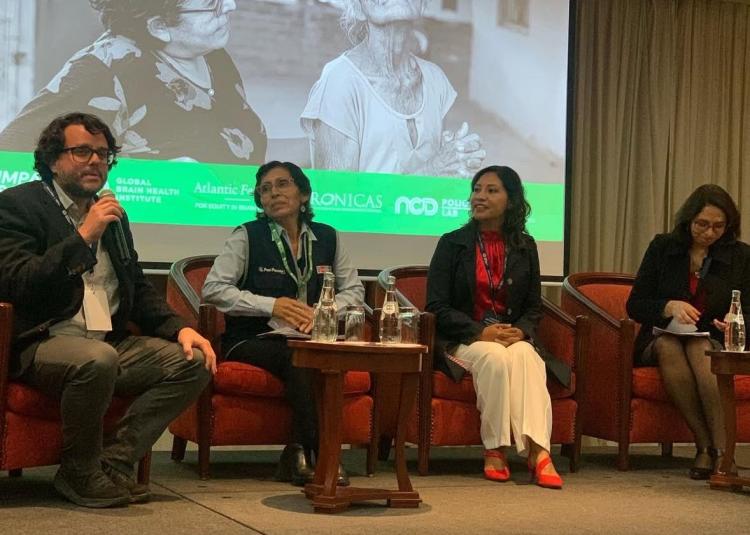
Researchers and partners involved in advancing dementia policy in Peru hold copies of the National Plan for the Prevention and Treatment of Alzheimer’s Disease and Other Dementias (left). Clinicians, researchers, and policy leaders participate in a discussion on brain health and dementia care in Peru (right). Photos courtesy of Impact Salud and CRONICAS (left) and Impact Salud (right).
Connecting local action with global dialogue
Through collaboration with the GBHI, Impact Salud—a collaboration between Universidad Peruana Cayetano Heredia and Imperial College London (ICL), led by Principal Investigators and physicians Sofia Cuba in Peru and Chris Butler in the UK—and the University of California Global Health Institute's GloCal Health Fellowship, these efforts have connected local work in Peru with regional and global conversations on dementia and brain health.
Reflecting on the importance of translating research into policy and practice, Cuba said:
“We congratulate Peru on the approval of the National Dementia Plan, an important milestone that reflects the country’s commitment to people living with dementia and their families. Research must not only generate evidence but also help drive meaningful public policy change. At Impact Salud, we remain committed to supporting implementation by strengthening primary health care, promoting early detection, and advancing integrated, community-based models of care.”
In 2025, GBHI and Impact Salud co-hosted a series of convenings in Lima that brought together clinicians, researchers, caregivers, advocates, and policymakers. These included an Alzheimer’s Association International Conference Satellite Symposium, co-hosted by GBHI and the Alzheimer’s Association. Together, these gatherings created space to share perspectives, learn from international experience, and discuss priorities for dementia prevention and care in the Peruvian context.
These efforts have been strengthened through ongoing collaboration with a wide network of national and international partners, including local leaders such as Nilton Custodio, a neurologist and founder of the Instituto Peruano de Neurociencias (IPN) in Lima. They have also included close collaboration with Diego Aguilar, Regional Director for the Americas at Alzheimer’s Disease International, who led ADI’s engagement in Peru. Together with partners such as the Asociación Peruana de Alzheimer (APEAD), these collaborations have contributed technical expertise, advocacy experience, and connections to global best practices, supporting Peru’s work to strengthen dementia prevention, care, and policy.
Witnessing the challenges that neurocognitive disorders pose to patients and their families motivates us to participate in initiatives that help guide Peru’s healthcare response.
—Atlantic Fellow Marcela Mar Meza
Building public awareness and engagement
In parallel with these policy and research efforts, public engagement around brain health has continued to grow. In September 2025, Impact Salud organized the IMPACT 5K for Brain Health in Lima, held in connection with World Alzheimer’s Day. The community run and walk brought together families, caregivers, health professionals, and members of the public to raise awareness, reduce stigma, and encourage open conversations about dementia and aging. Events like this reflect the expanding role of grassroots advocacy and public participation in Peru’s response to dementia.
This work has also gained wider visibility through national and international media coverage highlighting the realities of dementia care in underserved communities. A recent feature in El País profiled Pintado-Caipa’s efforts to assess cognitive decline in remote communities in the Peruvian Amazon. Written by Atlantic Fellow Susana Lay and photographed by Atlantic Fellow Alex Kornhuber, the article follows a field visit to the community of Palizada in Loreto, where researchers conducted cognitive evaluations with older adults who face profound barriers to health care access. The story highlights the challenges of diagnosing dementia in communities shaped by linguistic, cultural, and educational differences—issues that the new national plan aims to address.

Community members gather in Lima for the IMPACT 5K for Brain Health, an event that raises awareness about dementia and brain health. Photo courtesy of Impact Salud.
From policy to impact
The December 2025 Dementia Plan launch brought together representatives from government, academia, clinical care, and caregiver organizations, highlighting the shared responsibility needed to turn policy into action. The plan outlines a roadmap focused on prevention, early identification, improved access to services, research, and better coordination across sectors. It also emphasizes equity, human rights, and comprehensive, person-centered care.
Reflecting on the importance of implementation, July Caballero Peralta, Director of Mental Health at Peru’s Ministry of Health (MINSA), said:
“The implementation of the National Plan for the Prevention and Treatment of Alzheimer’s Disease and Other Dementias 2026-2028 represents a significant step forward in Peru’s public health policy. This plan aims to strengthen the healthcare system’s response to the population’s cognitive challenges, promoting early detection, equitable access to treatment, and comprehensive support for families. Within this framework, Community Mental Health Centers (CSMCs) are consolidated as key spaces for close and supportive care, capable of integrating specialized services with the social and community fabric.”
With a national plan in place, Peru now has a shared framework to guide action across prevention, early detection, care, research, and caregiver support. Just as importantly, the plan signals a public commitment to equity and human rights—recognizing that people living with dementia and those who care for them deserve visibility, support, and dignity.
Peru’s progress adds momentum to broader efforts across Latin America, where several countries are aligning their national strategies with the World Health Organization’s Global Action Plan on Dementia. While each country’s approach reflects its own context, together these efforts point to growing regional leadership in addressing dementia as a public health priority.
For GBHI and the Atlantic Fellows network, this moment underscores the value of long-term, relationship-based work—and an intentional commitment to advancing policy that improves brain health equity. Policy change is rarely the result of a single event. It grows out of years of shared effort, trust, and persistence. As Peru moves into the implementation phase of its national plan, continued collaboration among government, civil society, researchers, clinicians, caregivers, and people living with dementia will be essential to turning policy into meaningful action.
The work ahead is substantial. But with this plan in place, Peru has taken a meaningful step forward—recognizing the needs and dignity of people living with dementia and those who care for them, and opening new possibilities for coordinated, evidence-informed action in the years to come.
Authors

Niall Kavanagh
Communications Officer

Camellia Latta, MLA
GBHI Members Mentioned

Maritza Pintado-Caipa, MD
Neurologist

Marcela Mar Meza, MD, MS
Geriatrician

Serggio Lanata, MD, MS
Associate Professor of Neurology

Susana Lay, BA
Writer, Researcher

Alex Kornhuber
Photographer

Sheila Castro-Suarez, MD
Neurologist
Maryenela Illanes-Manrique, MD
Psychiatrist
Jonathan Adrián Zegarra Valdivia, PhD
Neuroscientist