
Overview
Down syndrome (DS) is a genetically determined form of Alzheimer’s disease (AD) caused by triplication of chromosome 21, which includes the amyloid precursor protein (APP) gene. Virtually all adults with DS have full blown AD pathology by age 40, with similar trajectory to autosomal Alzheimer’s disease and most will develop dementia during their lifetime. DS provides a unique model for studying the mechanisms that drive Alzheimer’s disease and for identifying early biomarkers of disease progression.
The Global Brain Health Institute (GBHI) leads a coordinated programme of research on DSAD that spans biomarker discovery, neuroimaging and brain aging models, neurophysiological and psychosocial studies, and health systems research. A central aim is to promote inclusion and equity by ensuring that people with DS are represented in scientific, clinical, and global health research.
Project Details
Biomarkers of DSAD: PREVENT Dementia – DS
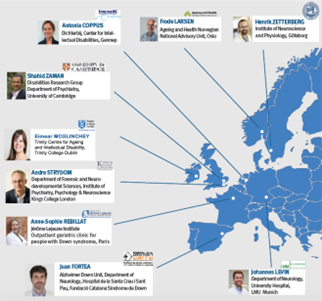
PREVENT Dementia – DS is the first biomarker study in Ireland focused on identifying early biomarkers of Alzheimer’s disease in people with Down syndrome. It integrates neuroimaging, plasma markers, cognitive assessments, and lifestyle measures to characterise the earliest stages of DSAD. The study forms part of the Horizon 21 European Down Syndrome Consortium, which harmonises biomarker and cognitive data across European cohorts. The project also evaluates dried blood spot sampling to expand access to biomarker testing in community and low-resource settings.
Down Syndrome in the Global South
Although life expectancy for people with Down syndrome is increasing globally, research and clinical infrastructure remain concentrated in high-income countries. GBHI is working with fellows and collaborators across the Global South to establish research programmes, build local capacity, and ensure equitable access to diagnostic and support services.
In South Africa, collaborative work led through GBHI and the Atlantic Fellowship for Health Equity, together with people with Down syndrome, families, clinicians, and policymakers, has identified priorities for advocacy, education, inclusion, and service development. This work provides a foundation for Down syndrome cohort studies and informs the development of national dementia strategies that include Down syndrome. Similar initiatives are now being extended to other countries across the Global South.
Within the same context, the FUNDISA project (Framework for Understanding of Neurocognitive Disorders through Indigenous Systems in South Africa), brings together fellows across the Atlantic Institute Programmes to examine how dementia and cognitive decline are understood within Indigenous knowledge systems. This study explores convergences between biomedical and traditional frameworks and seeks to inform culturally congruent models of care and communication.
Brain Clocks – DS
The Brain Clocks project applies multimodal neuroimaging and electrophysiological methods to model biological brain aging in Down syndrome and Alzheimer’s disease. Using advanced computational approaches, the study estimates brain age from structural and functional data to quantify patterns of accelerated brain aging. By integrating imaging, cognitive, and plasma biomarker data, the project aims to identify early indicators of disease progression and to refine models of neurodevelopmental and neurodegenerative change in DSAD.
EEG and Hyperscanning in Down Syndrome
This developing project investigates the use of EEG hyperscanning, which records brain activity from two or more individuals simultaneously, to capture neural synchrony during social and cognitive interactions in people with Down syndrome. This study aims to apply hyperscanning to group-based cognitive stimulation therapy with people with Down syndrome and other intellectual disabilty as an objective neural measure of engagement and communication. The work provides the foundation for future intervention studies using EEG-based outcomes in DSAD.
Post-Diagnostic Dementia Supports for People with Down Syndrome
This programme examined how individuals with intellectual disabilities, including those with Down syndrome, experience post-diagnostic dementia support. The findings informed the development of the Post-Diagnostic Dementia Support Guidelines for People with an Intellectual Disability which outline best practices across five pillars: inclusion, enablement, infrastructure, awareness, and health. These guidelines continue to shape policy, service design, and training in dementia care for people with intellectual disabilities.
Down Syndrome at Creative Brain Week
Inclusion of people with Down syndrome has been a feature at Creative Brain Week over a number of years through sessions that integrate science, lived experience, and the arts. These events brought together people with DS, families, researchers, and clinicians to explore brain health, ageing, and creativity, and to promote public engagement with DSAD research.