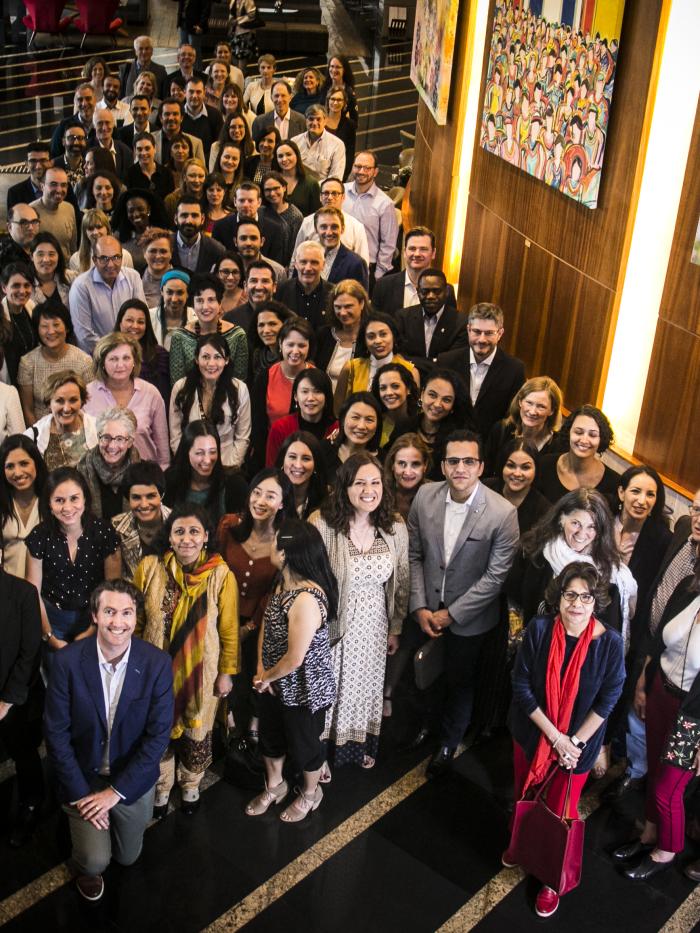
In this perspective, Atlantic Fellow Paul Animbom Ngong shares how a leadership retreat in New Mexico shaped his thinking about equity, service, and collaboration in global brain health. Through conversations, site visits, and shared learning, he explores how leadership can be grounded in place, humility, and community.
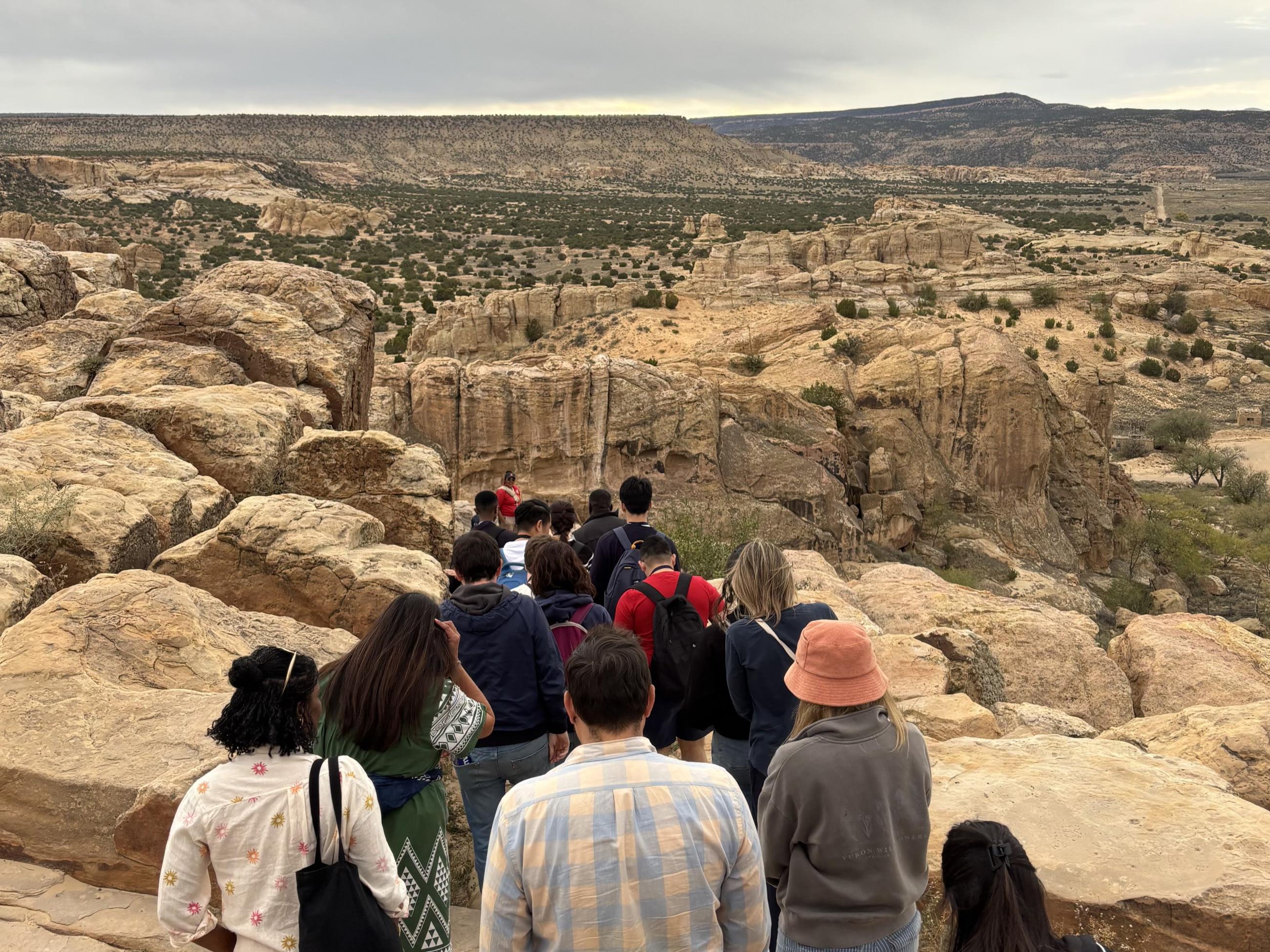
Fellows walk together through the New Mexico landscape, reflecting on leadership, equity, and place.
The annual leadership week is a core part of the Atlantic Fellows for Equity in Brain Health program at the Global Brain Health Institute (GBHI) at the University of California, San Francisco (UCSF), bringing each cohort together in places that reflect cultural diversity and complex health and social realities. For the 2025 cohort, we traveled to a U.S. state known for its distinctive blend of Native American, Hispanic, and Anglo cultures. New Mexico—where art, food, and history unfold across red rock formations, snow-capped mountains, and high desert—offered an ideal setting for a week focused on leadership and health equity.
Beneath the expansive New Mexican sky, in October 2025, between Albuquerque and Santa Fe, we didn’t just talk about leadership—we experienced it in context. The vast landscapes, ancient settlements, and lively communities made questions of purpose, responsibility, and service feel immediate and tangible. New Mexico, the “Land of Enchantment,” with its profound Indigenous roots and layered histories, invited us to reflect on how leaders can honour their communities, safeguard dignity, and pursue equity in ways rooted in place.
Two Cities, Two Learning Spaces
Albuquerque and Santa Fe offered two distinct yet complementary learning environments. Albuquerque, the largest city in New Mexico, is a bustling centre for research, healthcare, and community life. It raised practical questions about fairness, access to care, and how leaders can connect institutions and communities. Santa Fe, the capital, is smaller and famous for its adobe buildings, vibrant arts scene, and deep respect for heritage. Together, the two cities showed how leadership can honour culture and history while embracing change, and how leaders can act with humility, clarity, and care.
The week in these two cities became a turning point for both professional and personal growth. Time spent with faculty, fellows, and community partners created a rich space for learning and self-examination. The diversity of perspectives pushed me to question my assumptions and to expand my understanding of what leadership for global brain health can and should look like.
Conversations with GBHI Faculty
One of the most meaningful aspects of the week was the chance to connect more closely with GBHI faculty. The time together brought fellows and faculty into shared spaces—through informal conversations, small group discussions, and structured sessions—that encouraged deeper connection and open, thoughtful dialogue.
These exchanges felt both energizing and humbling. Faculty listened carefully to my work on Alzheimer’s and dementia in Cameroon and showed the same care and curiosity for other fellows’ work. Their openness and curiosity helped me see leadership as deeply relational: about listening, making room for others, and using one’s position to support and amplify, not dominate. This experience strengthened my belief that good leadership in global health is built on mentorship, mutual respect, and shared purpose.
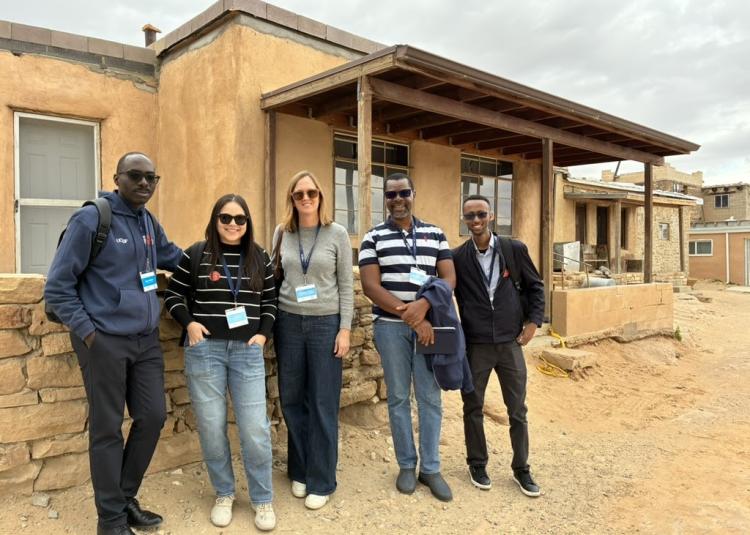
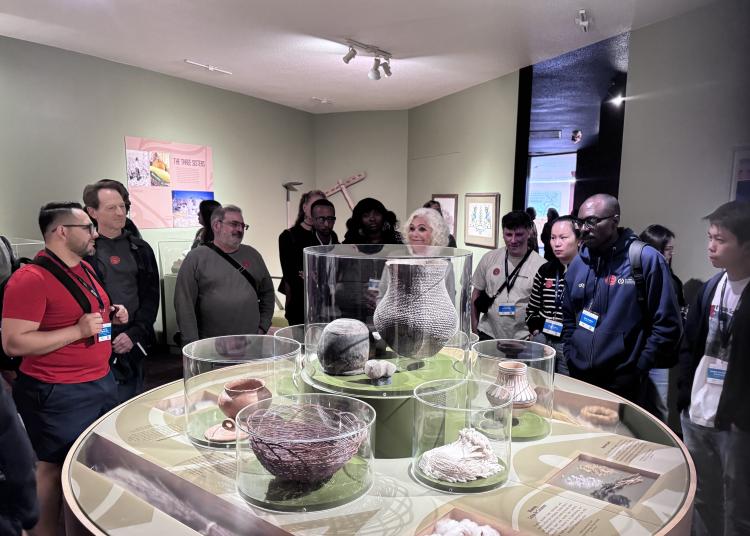
Left: Abel Rubega, Stacey Yamamoto, Virginia Sturm, Paul Animbom Ngong, and Abera Begena visit a community site in New Mexico as part of a place-based leadership learning experience. Right: During a visit to the Indian Pueblo Cultural Center in Albuquerque, New Mexico, fellows learn from local history, art, and traditions rooted in place.
Thinking Beyond the “Box”
A key teaching moment came during a session led by Kai Kennedy, focused on “thinking outside the box.” The session highlighted how easy it is, as leaders and researchers, to focus only on what is within familiar structures—established systems, usual partners, standard methods—and to ignore those who sit outside these boundaries. It showed how this “box thinking” can limit innovation and exclude essential voices.
This was both surprising and energizing. The ideas were further deepened by reflections from Kate Rankin, Virginia Sturm, and Victor Valcour, who each added different angles on inclusion, systems thinking, and responsibility. I saw clear links to my work on arts and health: for years, we have often focused mainly on formal services and conventional research settings, while people outside these structures—families, community elders, traditional healers—hold knowledge and power that are vital for change. The session encouraged me to design work that is more inclusive and participatory, so that those usually “outside the box” help shape the agenda from the start.
Learning from Fellows: Inclusion and Co-Creation
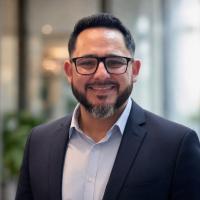
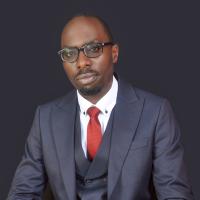
In a group discussion in Albuquerque, a fellow from Thailand, Poosanu Thanapornsangsuth, broadened my thinking about leadership and inclusion. As I described my work in Cameroon, he gently asked how often I speak directly with people who are usually outside formal systems—such as caregivers with little schooling or those living far from health facilities. Fellows from Guatemala (Héctor Mendizábal) and Uganda (Abel Rubega) shared that in their own projects, they invite such people into early planning meetings, even when this slows the process.
This conversation felt both challenging and inspiring. It pushed me from the idea of “consulting” communities after plans are made, toward genuinely co-creating with them from the beginning. It made me rethink what participation means and whose voices I treat as essential. As a result, I now see leadership not just as creating space for others, but as actively shifting power so that communities help shape questions, methods, and solutions. This insight has stayed with me as one of the most important lessons of the week.
Visiting Pueblo Communities: Culture, Continuity, and Leadership
Visits to Pueblo communities provided another decisive learning moment. There, we saw how people work hard to maintain their culture, language, and architecture, even as modern life brings new pressures. Their strong connection to ancestry, land, and collective decision-making demonstrated a leadership model rooted in history and shared responsibility.
These visits were deeply humbling. They showed how leadership can be quiet, steady, and community-based, rather than loud or highly visible. Watching how Pueblo communities balance continuity and change helped me appreciate the importance of context, identity, and heritage in any leadership practice. It also reminded me that practical global brain health work must respect local traditions, rather than simply importing outside models.
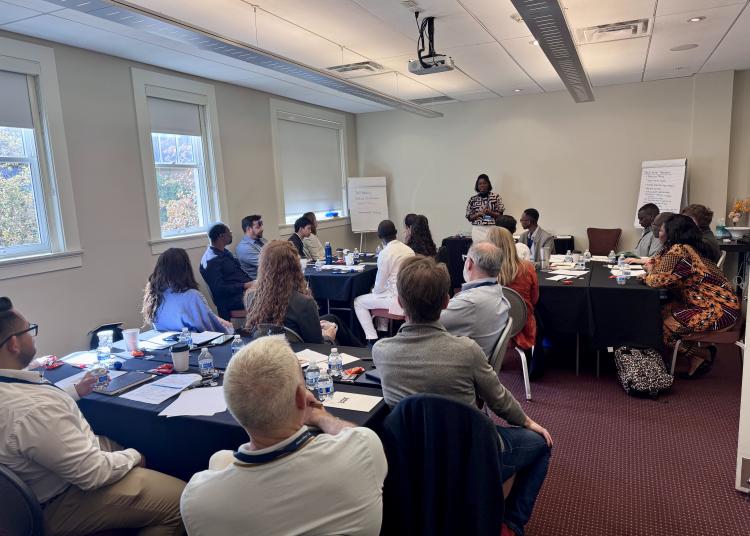
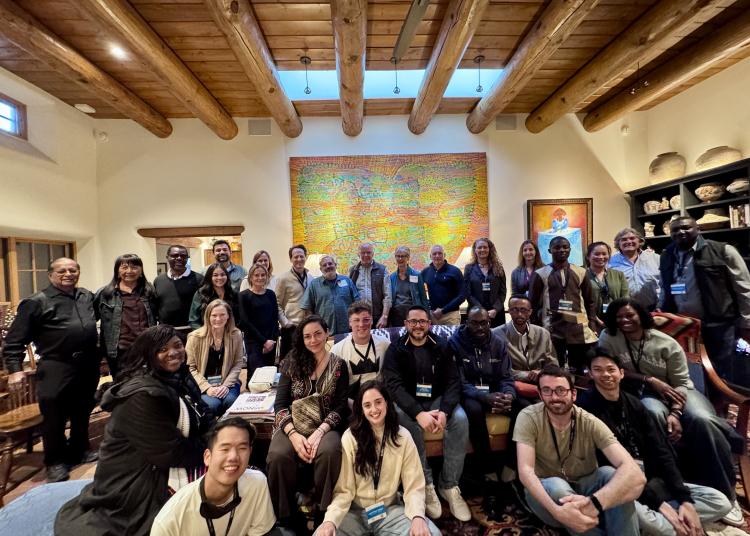
Left: Fellows gather for a facilitated group discussion led by Kai Kennedy, sharing perspectives and learning from one another. Right: GBHI community members come together during the New Mexico leadership retreat.
Learning from Chuck Feeney’s Example
Another defining moment was learning about the life and work of Chuck Feeney and Atlantic Philanthropy, guided by Chris Oechsli. Feeney chose to give away most of his fortune during his lifetime, living modestly and “leading from behind” so that resources could support education, health, and social change worldwide.
This story was both surprising and deeply moving. In a world that often celebrates wealth, status, and visibility, Feeney’s quiet, self-sacrificing approach offers a very different picture of leadership. It showed me that real influence does not depend on being seen in “first class,” but on using one’s resources—whether money, knowledge, or position—to serve others. His example reinforced the idea that leadership is a daily practice of service, not a title or destination.
How this leadership week will shape my work and practice
Taken together, these experiences—conversations with faculty, the honest exchanges with fellows, the visit to Pueblo communities, and the story of Chuck Feeney—have changed how I think about leadership in global brain health. The week was surprising, humbling, and energizing in equal measure. From now on, this leadership week will influence my work in several concrete ways. I will design research and interventions that involve communities as co-creators rather than just participants. I will pay closer attention to those who are usually “outside the box” and work to bring their voices into decision-making. I will lead with more humility, service, and cultural sensitivity, aiming to build projects that are scientifically strong, locally grounded, and guided by shared values.
Authors
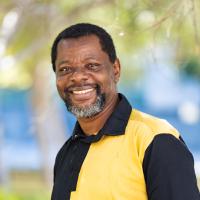
Paul Animbom Ngong, PhD, MPhil, MA
Communicator, Creative Arts Therapist and Researcher
GBHI Members Mentioned

Kai Kennedy, PT, DPT
Associate Professor of Physical Therapy
Kate Rankin, PhD
Professor of Neuropsychology
Virginia Sturm, PhD
Professor of Neurology and Psychiatry
Victor Valcour, MD, PhD
Site Director, University of California, San Francisco
Poosanu Thanapornsangsuth, MD
Neurologist
Héctor Mendizábal, M.D.
Psychiatrist & Neuropsychiatrist
Abel Rubega, MBChB, MMED Psychiatry
Psychiatrist